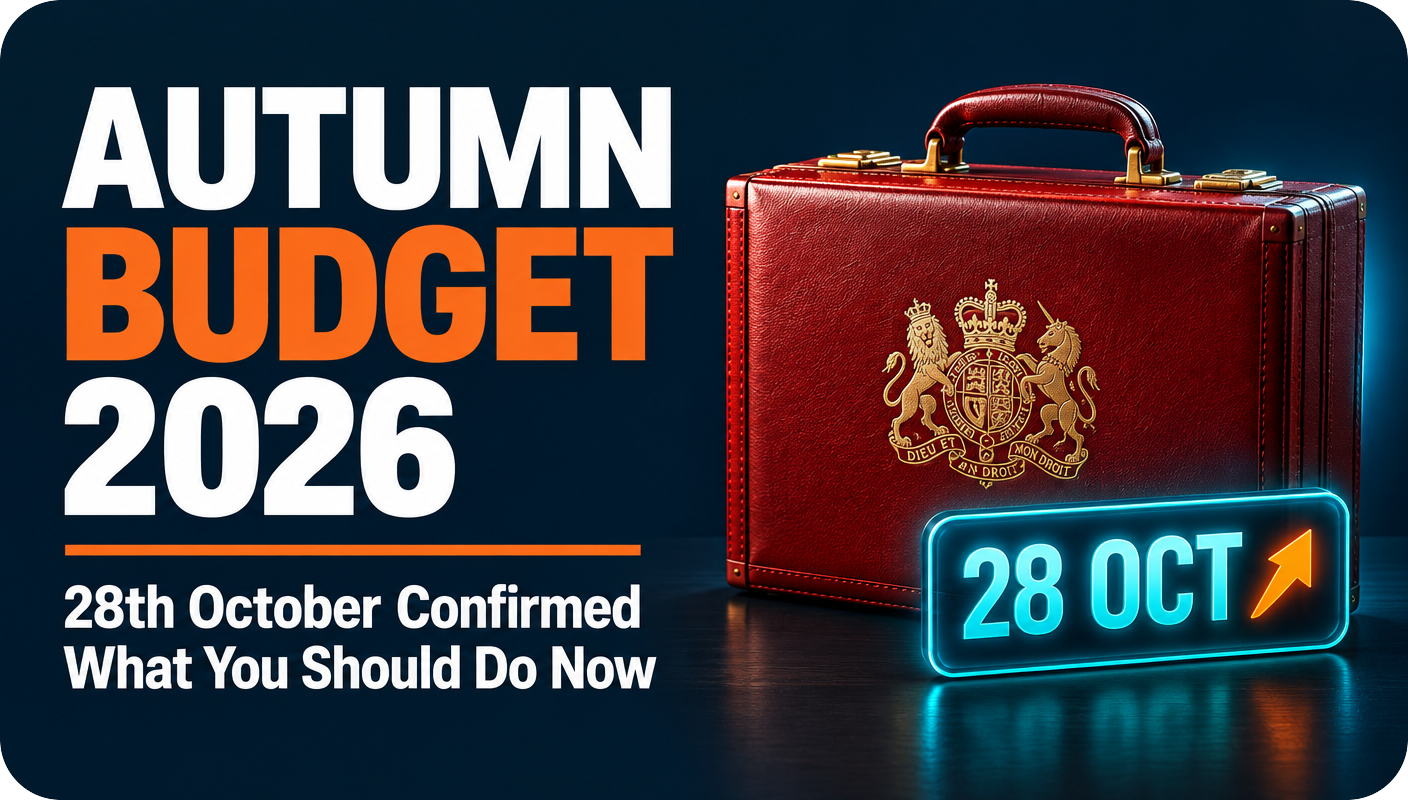
Autumn Budget 2026, Date Confirmed for 28th October, What You Should Do Before It Lands
Autumn Budget 2026, Date Confirmed for 28th October, What You Should Do Before It Lands
The Autumn Budget is confirmed for 28th October 2026, when Chancellor John Healey is due to deliver his statement. That is about four weeks away. For small businesses, sole traders and limited company directors, now is a sensible time to review plans and get your records in order. All figures and guidance in this article are correct as of 28th September 2026.
Key takeaways
- Several tax and business changes are being discussed, but speculation is not law. Wait for confirmed details before making major decisions.
- Review planned asset sales and your salary/dividend arrangements with an accountant before Budget day.
- Check your Employment Allowance claim and whether Making Tax Digital (MTD) applies to you.
- Bring bookkeeping up to date now, so you can make decisions using reliable figures.
What could change in the Autumn Budget?
There is plenty of discussion ahead of the Chancellor's statement, but several of the ideas being reported are proposals or speculation only. They are not confirmed tax rules. In particular, possible alignment of Capital Gains Tax (CGT) rates with Income Tax could mean significantly higher CGT for some disposals if it were introduced. There is also speculation about bringing pension pots within Inheritance Tax calculations, which could affect family and business succession planning.
Business rates reform is also on the agenda. A 20% reduction for pubs and retail has been confirmed, while a broader review is ongoing. Possible further changes to employer National Insurance contributions or wage measures have also been discussed. The detail matters: eligibility, start dates and transitional arrangements can all affect what a change means for your business.
Important: proposals are not law
Do not treat headlines or rumours as settled policy. The final Budget documents and legislation will confirm what is changing, who is affected and when any changes take effect. Speak to your accountant before bringing forward a transaction or changing remuneration purely in response to speculation.
Five practical steps to take before Budget day
- Review planned asset sales. If you are considering selling shares, property or another business asset, discuss timing and potential CGT with an adviser. Do not rush a sale: commercial, legal and personal factors still matter.
- Check your Employment Allowance. The allowance rose to £10,500 in April 2026. Check that your business is eligible and that the claim has been made correctly through payroll.
- Get your books up to date. Timely bookkeeping gives you a clearer view of cash, profit and tax liabilities, and makes any new reporting requirements easier to manage. See our bookkeeping services.
- Review salary and dividends. A director's best mix depends on the company's profits, other income and current rules. Arrange a review with your accountant rather than relying on a one-size-fits-all calculation. Our limited company accounts service can help you plan.
- Check your MTD start date. MTD for Income Tax has already started from April 2026 for eligible people with qualifying self-employment and property income over £50,000. The next threshold is over £30,000 from April 2027. Check whether the rules apply to you and whether your records and software are ready. Find out about Self Employed MTD support.
Check your position, not just the headlines
The right preparation will differ between a sole trader, landlord and limited company. If you have a potential disposal or succession decision, bring the relevant figures and dates together and ask for advice based on your circumstances. Personal tax can also be affected by business decisions, so consider the full picture; our personal taxation service can support individual tax planning.
Good records make better decisions
Keep bookkeeping, payroll information, asset details and forecasts current. That way, once the final measures are announced, you can quickly establish whether they affect you and what action, if any, is appropriate.
When would Budget changes take effect?
A Budget announcement does not usually mean every measure applies immediately that day. Many changes take effect from the following April, while others may have different start dates, transitional rules or require legislation first. The official documents will set this out. Use the time between announcement and implementation to understand the rules and take considered advice; do not assume that a proposal will apply to your business as reported.
Autumn Budget 2026: your questions answered
Get ready before the Budget lands
360 Accounts will be watching the Budget and can help you understand what the confirmed changes mean for your business. Get in touch to arrange a review.
Contact 360 Accounts