
Autumn Budget 2026: What Small Businesses Should Do Before 28 October
 Ania Prochon - FMAAT, FMAAT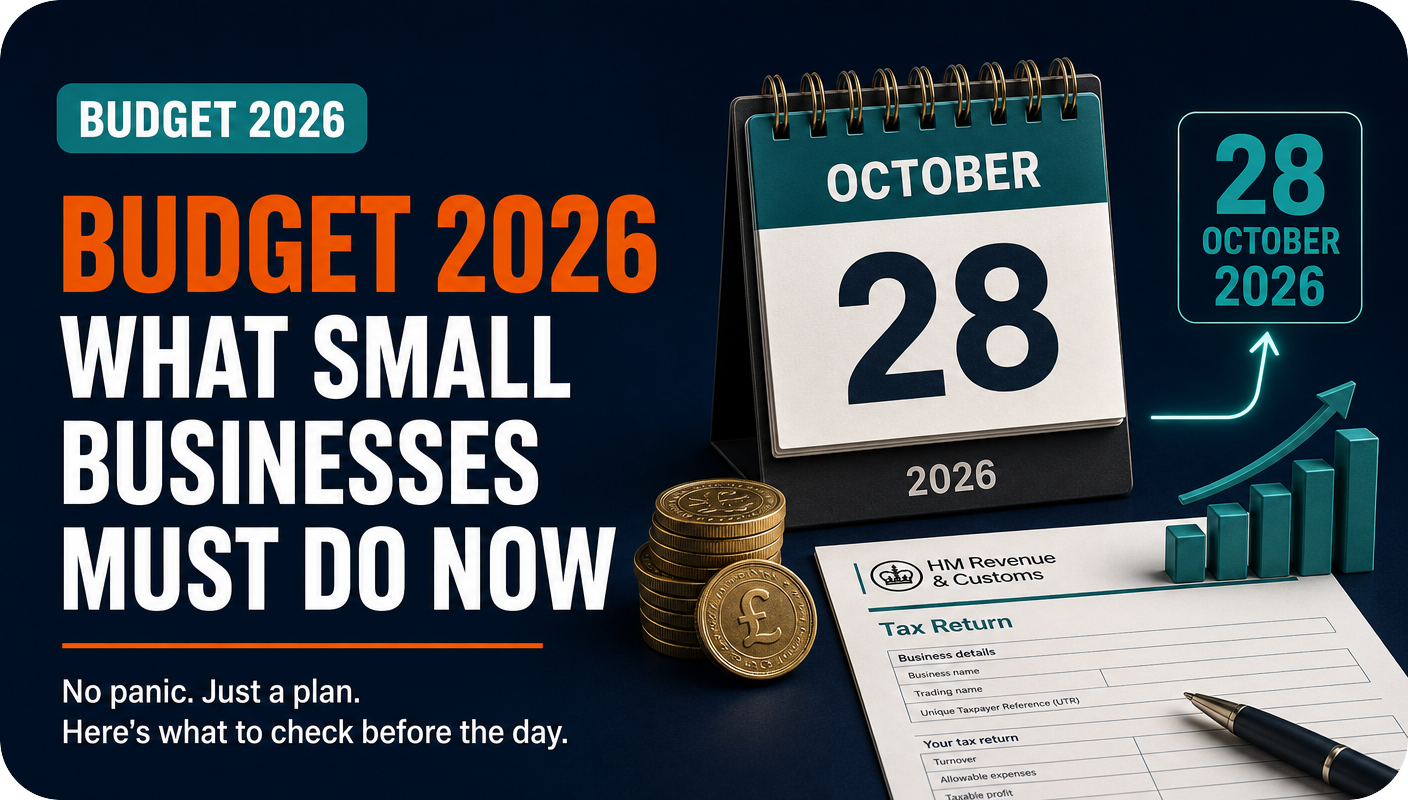
The Chancellor, John Healey, has confirmed the Autumn Budget will take place on 28 October 2026, with the Office for Budget Responsibility (OBR) publishing its updated economic forecast alongside it. All figures and rates in this guide are correct as of 7 September 2026. As always, the weeks before a Budget bring a wave of speculation about what might change — but very little is actually confirmed. This guide sets out what we know, what is simply commentary, and the practical steps every sole trader, small business and Ltd company director can take now, regardless of what the Budget eventually contains.
- The Autumn Budget is confirmed for 28 October 2026 — the OBR forecast is published alongside it.
- Almost no SME-specific tax measures have been confirmed. A 20% business rates cut for hospitality venues is the only firm announcement so far.
- Professional commentary is discussing possible fiscal pressures, but nothing about dividend tax, National Insurance or Corporation Tax has been confirmed for small businesses.
- Sensible pre-Budget housekeeping — reviewing cash reserves, remuneration mix, pension contributions and planned purchases — is worth doing every year, Budget or not.
- Do not make rushed decisions based on rumour. Plan calmly, keep flexibility where you can, and speak to us before acting on speculation.
What Has Actually Been Confirmed
The Budget date itself — 28 October 2026 — is confirmed, along with the fact that the OBR will publish its full economic and fiscal forecast on the same day. Beyond that, the only concrete SME measure announced ahead of time is a 20% reduction in business rates for eligible hospitality venues. Everything else being discussed in the press — from dividend tax to National Insurance thresholds to Corporation Tax rates — is speculation, not policy.
It is worth being clear about this distinction, because every autumn brings a flurry of "Budget leak" style articles. Some of it is informed commentary from tax professionals discussing where fiscal pressure might fall. None of it is government policy until it is announced from the despatch box on the day.
Why Speculation Should Not Drive Your Decisions
It is tempting, when commentary suggests dividend tax or Corporation Tax could rise, to rush into decisions — extracting extra dividends now, bringing forward a big purchase, or delaying an investment "just in case". This can backfire. Rates and thresholds can move in either direction, and structuring your affairs around a rumour that never materialises can leave you worse off than doing nothing at all.
Your Practical Pre-Budget Checklist
- Review your cash reserves. Know your current cash position and runway so you can respond quickly once the Budget detail is known, rather than reacting under pressure.
- Revisit your salary and dividend split. If you are a director of a limited company, check whether your current remuneration mix still makes sense with up-to-date figures, and be ready to adjust once any confirmed changes are known.
- Consider pension contributions before the deadline. Employer pension contributions remain one of the most tax-efficient ways to extract profit from a company. Review your position with plenty of time before 28 October.
- Think about the timing of major purchases. If you are planning a significant asset purchase, model both a before-Budget and after-Budget scenario so you are not caught out by any change to capital allowances.
- Check your director's loan account. Make sure any director's loan balances are understood and, where possible, cleared or formalised well ahead of your company year end.
Watch Out For
Avoid making irreversible financial decisions — such as large one-off dividend withdrawals, restructuring your business, or cancelling planned investment — purely because of media speculation. Wait for confirmed detail on 28 October, then act quickly and deliberately once the facts are known. If you are unsure whether a decision should wait, ask us before you commit.
How 360Accounts Can Help
Whether you run your business as a sole trader, operate a growing small business, or direct a limited company, we can review your current position ahead of the Budget and help you plan sensibly. This includes looking at your personal tax position, your pension strategy, and the most tax-efficient way to extract profit from your business. We will also send a clear summary of what actually changes as soon as the Budget is delivered, so you are never relying on headlines alone.
Want a pre-Budget review of your business finances?
Book a Free CallQuestions & Answers
When is the Autumn Budget 2026?
The Autumn Budget is confirmed for 28 October 2026. Chancellor John Healey will deliver the Budget statement, and the OBR will publish its updated economic and fiscal forecast alongside it.
Have any small business tax changes been confirmed for the Budget?
As of 7 September 2026, the only confirmed SME-specific measure is a 20% business rates cut for eligible hospitality venues. No changes to dividend tax, National Insurance, Corporation Tax or income tax have been confirmed. Professional commentary is discussing possibilities, but none of this is government policy yet.
Should I take extra dividends before the Budget just in case?
Not on the basis of rumour alone. Extracting dividends purely because of speculation can create an unnecessary tax bill if the anticipated change never happens. It is more sensible to review your normal remuneration mix through our limited company accounts service and be ready to adjust once real detail is confirmed.
Should I delay or bring forward a big purchase before 28 October?
There is no confirmed reason to change your plans yet. If you have a significant purchase planned, it is worth modelling the numbers both ways so you can move quickly whichever way capital allowances or reliefs go on Budget day, rather than making the decision now based on guesswork.
How does the hospitality business rates cut work?
A 20% reduction in business rates has been confirmed for eligible hospitality venues. Full eligibility criteria and the mechanics of how the discount will be applied are expected to be set out in more detail closer to, or on, Budget day.
What should sole traders do to prepare for the Budget?
Sole traders should focus on the fundamentals that matter regardless of the Budget outcome: know your current cash position, keep your bookkeeping up to date, and understand your likely Self Assessment liability. Our self-employed and Making Tax Digital service can help you stay ahead of your obligations whatever the Budget brings.
Ania Prochon - FMAAT
Meet Ania! With years of experience in bookkeeping, accountancy and tax, she brings a wealth of knowledge and a warm, friendly approach to her work. Having run her own business, Ania understands the challenges business owners face, from small local firms to larger companies. Outside work, she loves a challenge, including her ambition to swim the English Channel! Her dedication, enthusiasm and genuine passion for helping others make her a valued member of the team.