
Do You Need a Bookkeeper, an Accountant or Both?
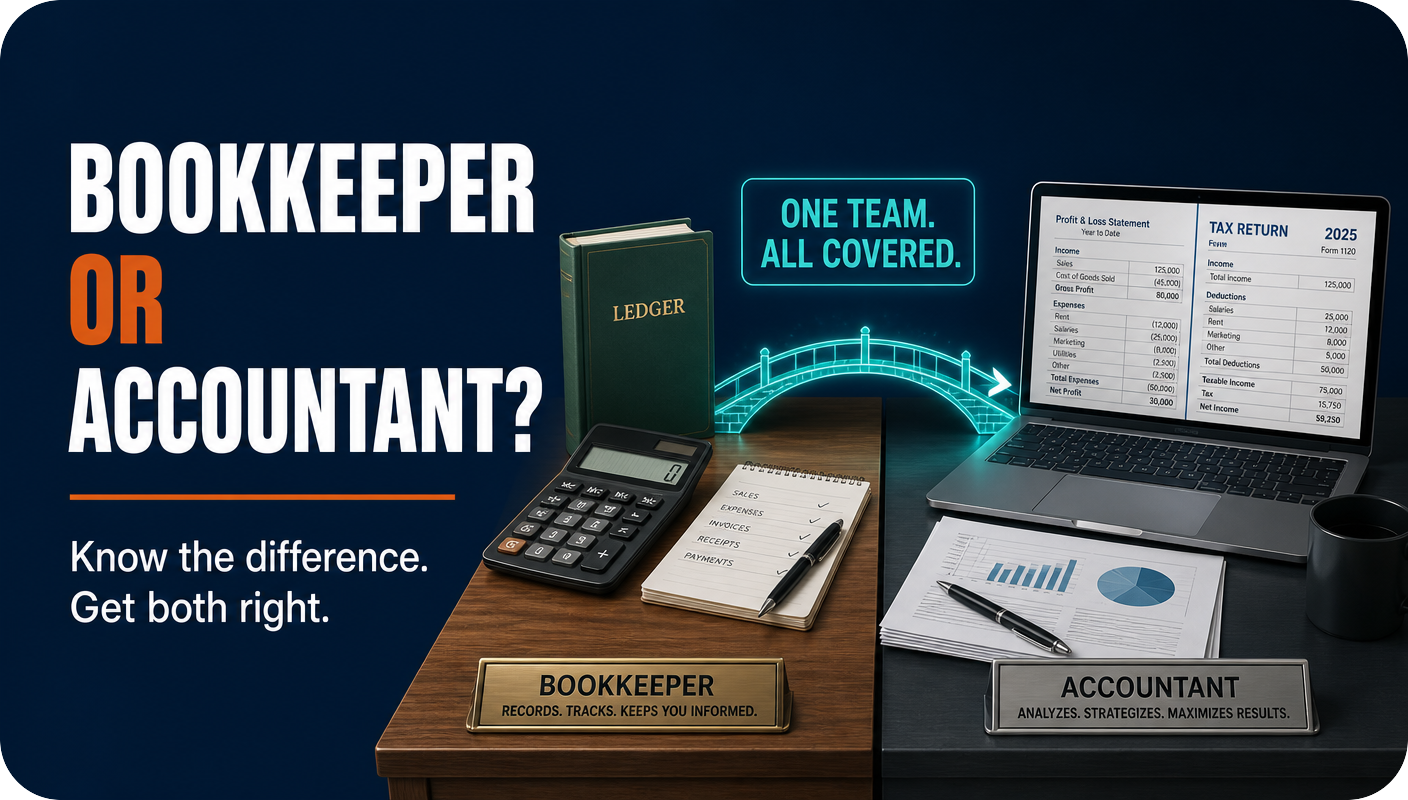
Do You Need a Bookkeeper, an Accountant — or Both?
It's a common question from small business owners across Guildford and Surrey: "Do I need a bookkeeper, an accountant, or both?" As of 25 August 2026, HMRC penalties for late Self Assessment filing start at £100 and rise sharply, and Companies House charges up to £1,500 for accounts filed more than six months late — figures showing how much rides on getting this right. The good news: the answer isn't complicated once you understand each role.
- A bookkeeper handles day-to-day recording of income, expenses, invoices and bank transactions.
- An accountant interprets that data, prepares statutory accounts, files tax returns, and advises on strategy.
- Sole traders can often start with just a bookkeeper; Ltd companies almost always need an accountant too.
- The two roles work best together — clean books mean cheaper, faster, more accurate accounts.
- A firm offering both, like 360 Accounts' bookkeeping services, removes the handover gap entirely.
What does a bookkeeper actually do?
A bookkeeper handles the ongoing, granular recording of your finances — reconciling bank statements, logging invoices, categorising expenses, and keeping your accounting software current week by week. Good bookkeeping is the foundation everything else is built on.
What does an accountant do?
An accountant turns that data into something compliant and useful: preparing year-end statutory accounts, filing Corporation Tax returns, submitting figures to Companies House, and advising on tax-efficient structures, dividends and salary. If you run a limited company, an accountant isn't optional — you're legally required to file annual accounts and a Corporation Tax return.
When does a small business need each one?
Sole traders with simple income may get by with a bookkeeper (or good software), plus year-end help with a Self Assessment return. Once you incorporate, hire staff, register for VAT, or grow, the compliance burden rises and you'll need an accountant to meet HMRC and Companies House deadlines. Many set both up from day one via our start-up and formation service.
Figures accurate as of 25 August 2026, based on current HMRC and Companies House late-filing penalty schedules.
How the two roles work together
Think of bookkeeping as the raw ingredients and accountancy as the finished dish. When records stay accurate all year, your accountant spends less time untangling errors and more time finding tax savings and advising on decisions before they happen — not after.
The bottom line
Most small businesses eventually need both a bookkeeper and an accountant — the real question is timing. Sole traders can start lean and add support as they grow; limited company directors typically need both from the outset. Choosing a firm that combines both, like 360 Accounts, means nothing falls through the cracks.
Not sure what level of support your business needs?
Get a free, no-obligation chat with our team and we'll recommend the right mix of bookkeeping and accountancy for you.
Talk to Us TodayFrequently Asked Questions
Can I just use accounting software instead of hiring anyone?
Software like Xero or QuickBooks won't catch misclassified expenses, ensure you claim everything you're entitled to, or file statutory returns. Most businesses use software alongside professional support, not instead of it.
I'm a sole trader with low turnover — do I really need an accountant?
Not always immediately, but an annual review of your Self Assessment return helps identify allowable expenses and confirms whether incorporating would save you tax.
What's the difference in cost between a bookkeeper and an accountant?
Bookkeeping is typically charged at a lower rate; accountancy fees reflect qualifications and strategic advice. Bundling both with one firm is usually more cost-effective than two separate providers.
Do limited companies legally require an accountant?
No strict requirement, but companies must file statutory accounts and Corporation Tax returns correctly, with penalties for errors. In practice, almost all limited companies use an accountant.
How often should I be updating my bookkeeping?
Ideally weekly or monthly, not just at year-end, giving you a real-time cash and VAT position and cheaper year-end accounts.
Can 360 Accounts provide both bookkeeping and accountancy?
Yes — from ongoing bookkeeping to year-end limited company accounts and start-up formation. One team, no gaps.