
Frozen Tax Thresholds - The Hidden Tax Rise Nobody Voted For
360 Accounts & Bookkeeping Ltd | 18 September 2026
Frozen Tax Thresholds — The Hidden Tax Rise Nobody Voted For
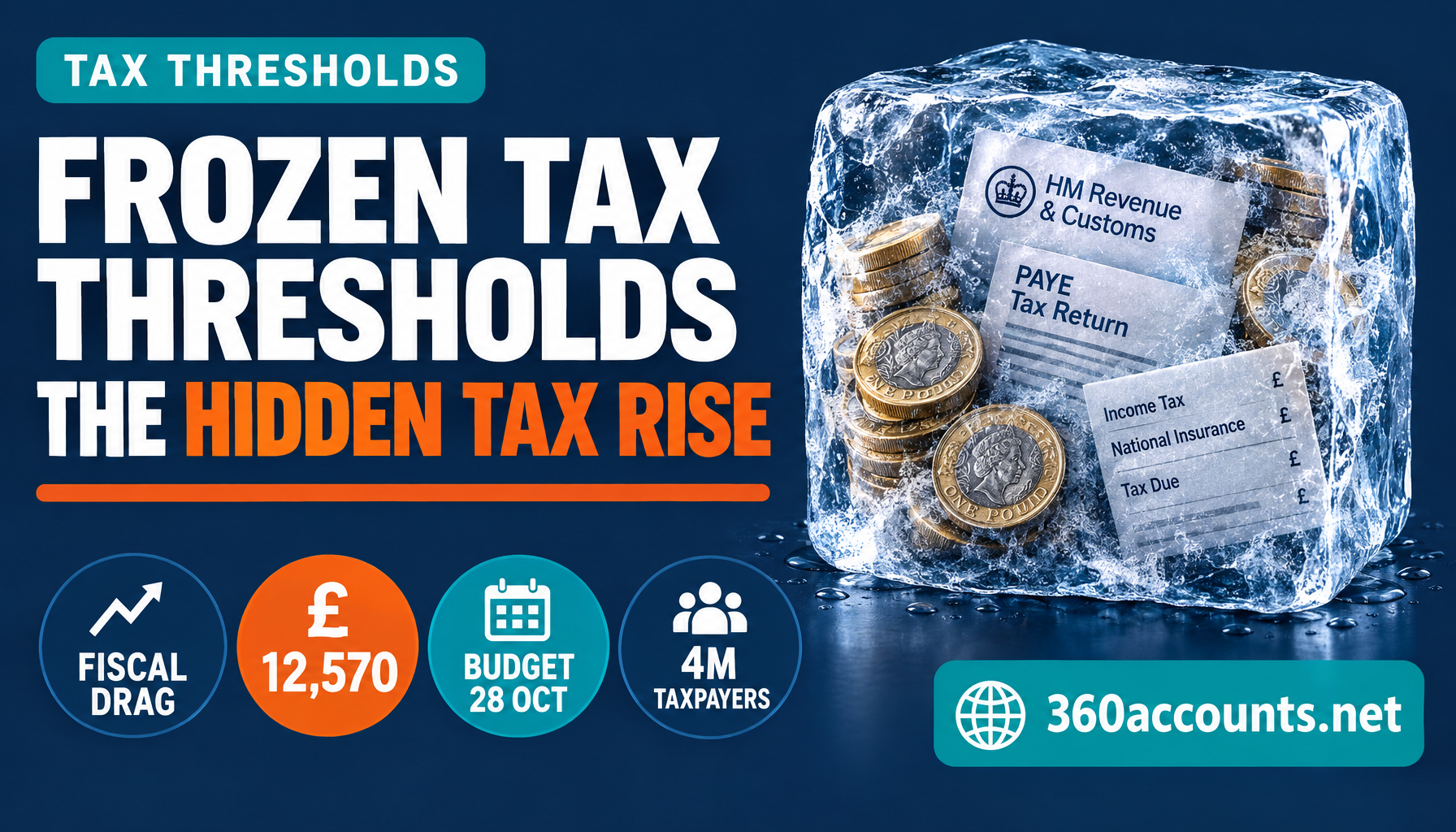
Your pay can rise while your tax bill rises faster. That is the quiet effect of frozen tax and National Insurance thresholds. There has been no headline increase in the basic or higher rate of Income Tax, but more of your earnings can become taxable as wages, profits and prices increase.
Key takeaways
- The standard Personal Allowance is £12,570 and the higher-rate threshold is £50,270 in the 2026/27 tax year.
- These main thresholds were fixed at their 2021/22 cash levels, rather than rising with inflation. The freeze has since been extended to 5 April 2031.
- The additional rate threshold fell from £150,000 to £125,140 in April 2023 and remains frozen.
- OBR estimated that the freezes would mean nearly 4 million more people paying Income Tax, 3 million more paying the higher rate and 400,000 more paying the additional rate between 2022/23 and 2028/29.
- The Autumn Budget is scheduled for 28 October 2026. Whether thresholds will be unfrozen is not known as of 18 September 2026.
What is fiscal drag?
Imagine a tax system where the bands move up as prices and pay rise. If your salary increases by 4% simply to keep pace with living costs, you should not automatically pay more tax in real terms. But when the thresholds stay still, the tax system takes a larger slice of that increased salary. You may also cross into a higher rate band.
That effect is called fiscal drag. It is a tax rise by stealth: the rates printed in the tax tables may be unchanged, but frozen thresholds increase the Government's receipts as incomes grow. It affects employees through PAYE, sole traders through Income Tax and Class 4 National Insurance, and company directors through salary, dividends and employer costs.
Warning: the next key date is 28 October 2026
The Autumn Budget is scheduled for 28 October 2026. As of 18 September 2026, there is no confirmed announcement that the Personal Allowance, higher-rate threshold or National Insurance thresholds will be unfrozen. Do not make an irreversible tax decision based on Budget speculation. Review your numbers now, then revisit them when the Chancellor's policy is published.
What to do now
- Project your total income or taxable profit for the year, not just your monthly pay.
- Check whether you are approaching £50,270, £100,000 or £125,140.
- Consider pension contributions, salary sacrifice or Gift Aid where appropriate, taking advice before acting.
- For a company, review the balance between salary, dividends, pension contributions and retained profits.
- Keep a cash reserve for tax rather than treating every rise in take-home pay as spendable.
The important distinction
A frozen threshold is not the same as a frozen tax bill. Your outcome depends on your whole tax position: other income, benefits, pension contributions, dividends, student loan deductions, Scottish tax rates and your business structure.
What exactly has been frozen?
For the 2026/27 tax year, the standard Personal Allowance remains £12,570. The basic rate band is £37,700, so the point at which the higher rate normally begins is £50,270. Those figures were fixed at their 2021/22 levels and the freeze has been extended to 5 April 2031.
The additional rate threshold was reduced to £125,140 from April 2023 and remains frozen. Income above that threshold is normally taxed at 45% outside Scotland.
National Insurance is part of the same story
National Insurance thresholds have also been kept aligned with, or frozen around, key Income Tax thresholds. The Class 1 Primary Threshold and the Class 4 Lower Profits Limit were aligned with the Personal Allowance. The Class 1 Upper Earnings Limit and Class 4 Upper Profits Limit remain aligned with the £50,270 higher-rate threshold.
Who is affected?
Employees
Ordinary pay progression and inflation-linked pay awards can move you into the higher-rate band sooner. Those earning above £100,000 face the Personal Allowance taper: £1 lost for every £2 of adjusted net income above £100,000, creating a very high effective marginal rate.
Sole traders and partners
A growing business can be pulled into higher Income Tax and Class 4 National Insurance as profits increase. Payments on account mean a successful year can also create a cash-flow shock.
Limited company directors
Directors can experience fiscal drag through salary, employer National Insurance and dividend tax bands. The most tax-efficient mix depends on profits, other income, pension objectives and Employment Allowance eligibility.
What does the OBR say?
The OBR estimated that the freezes would bring nearly 4 million additional people into Income Tax, move around 3 million more into the higher-rate band and around 400,000 more into the additional-rate band between 2022/23 and 2028/29. Compared with indexing thresholds by CPI, the OBR estimated the measures would raise £42.9 billion by 2027/28.
Will the Autumn Budget unfreeze thresholds?
As of 18 September 2026, the Budget is scheduled for 28 October 2026, but the final measures are not yet known. Plan on the rules currently in force and update the calculation if the Budget changes them.
Practical planning without panic
Start with a year-end forecast. Employees should include bonuses, benefits, savings interest and pension contributions. Sole traders should use a realistic profit projection and set aside a tax reserve. Directors should model the company and personal tax position together before deciding on salary, dividends or pension contributions.
Questions and answers
1. Is a frozen tax threshold really a tax rise?
It can be in real terms. If your pay or profit rises while thresholds stay fixed, more income is taxed or falls into a higher band — that is fiscal drag. Your personal result depends on your full income and circumstances.
2. What is the Personal Allowance in 2026/27?
The standard UK Personal Allowance is £12,570. It tapers away for adjusted net income above £100,000 and disappears at £125,140. Scottish taxpayers have separate Income Tax rates and bands.
3. When does the 40% rate start?
For most non-savings income in England, Wales and Northern Ireland, the higher-rate threshold is £50,270. Only the slice above the threshold is taxed at the higher rate, not your entire income.
4. Why is the additional rate threshold £125,140?
It was reduced from £150,000 to £125,140 from April 2023, aligning with the point where the Personal Allowance disappears. Income over £125,140 is normally subject to the 45% additional rate outside Scotland.
5. Do frozen thresholds affect sole traders and company directors?
Yes. Sole traders pay more Income Tax and Class 4 NI as profits grow. Directors are affected by salary thresholds, employer NI, and dividend tax bands. The right review looks at both business and personal figures together.
6. Should I wait for the Autumn Budget before planning?
No. Use the rules in force as of 18 September 2026 to forecast your position. Revisit after the 28 October 2026 Budget. Avoid rushing into irreversible decisions based on rumours.
For more practical guidance, browse our latest blog posts, see our accounting packages, or contact 360 Accounts & Bookkeeping Ltd to discuss your situation.
Make the quiet tax rise visible
Frozen thresholds are easy to overlook because the rates on the page look familiar. A clear forecast shows what fiscal drag means for your take-home pay or tax reserve. If you are approaching a key threshold, we can help you plan with confidence.
Sources: GOV.UK Income Tax rates and allowances 2026/27; OBR “Fiscal implications of personal tax threshold freezes and reductions”; GOV.UK policy on maintaining thresholds to 5 April 2031. Figures stated as of 18 September 2026. General information only, not personal tax advice.