
Government Tax Update 2026: The Changes Every Small Business Owner Needs to Know
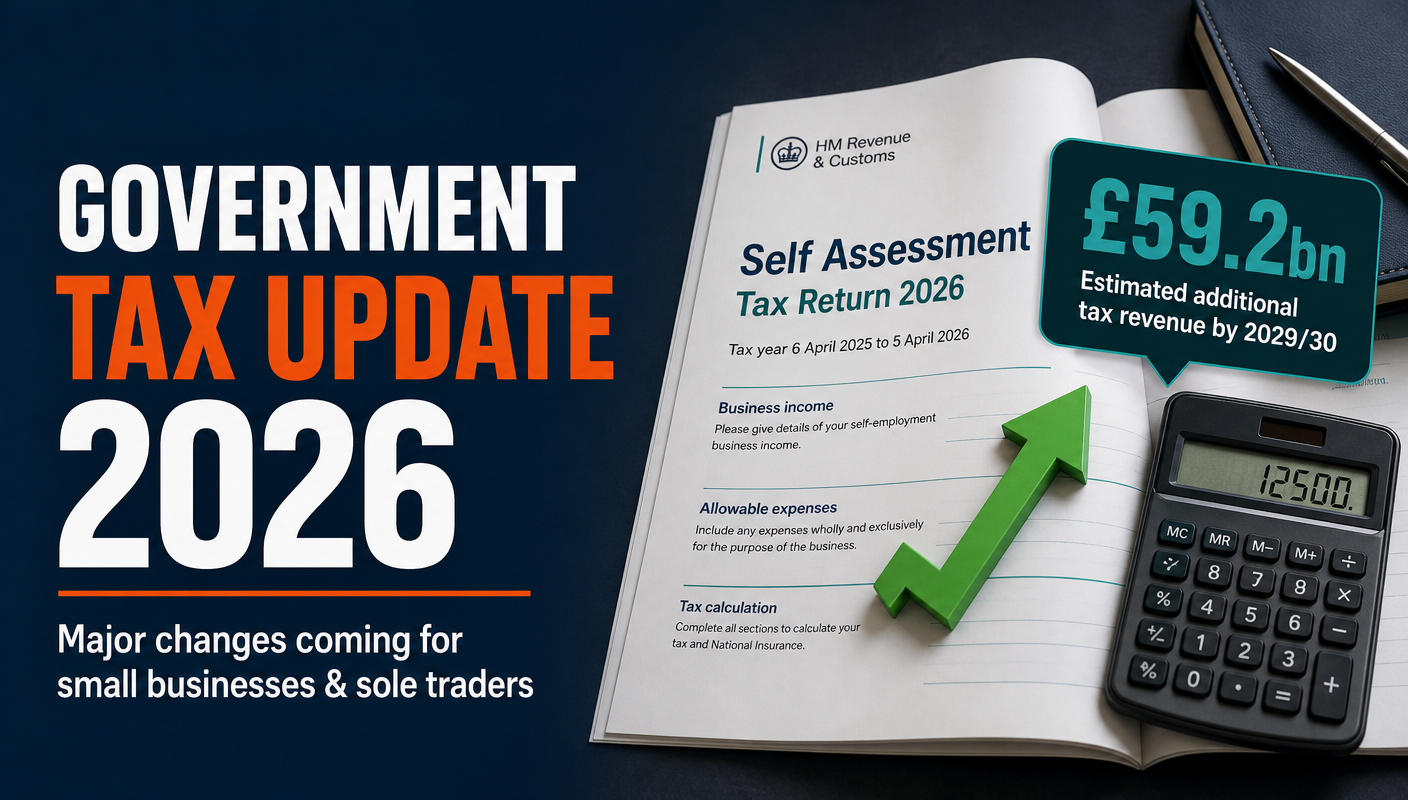
On 23 June 2026, the UK government released its annual Tax Update — a sweeping package of consultations, policy announcements and new legislation covering everything from how self-employed people pay their tax bills to new powers for HMRC to collect overdue debts directly from bank accounts. If you run a small business, work for yourself, or operate through a limited company, several of these changes could affect how you manage your money from 2029 onwards.
Key Takeaways
- Self-employed people with PAYE income will pay Self Assessment tax monthly via their payslip from April 2029.
- HMRC is consulting on mandatory direct debits for VAT and PAYE return liabilities.
- New powers proposed to recover small tax debts directly from bank accounts — without a court order.
- The UK tax gap has hit £59.2bn — small businesses account for 62% of the shortfall.
- ISA rules are changing: cash ISA limit drops to £12,000 from April 2027.
1. Paying Your Self Assessment Tax Monthly — From April 2029
This is arguably the biggest change for sole traders and the self-employed. Currently, if you earn self-employment income and also have a PAYE job or private pension, you pay your Self Assessment tax in two lump sums — in January and July — which can arrive as a nasty surprise, especially in the early years of trading.
From April 2029, approximately 2.1 million people in this position will instead have their forecasted Self Assessment liability collected automatically through their PAYE each payday — spreading the payments evenly across the year. This will not change the total amount of tax you owe; only when you pay it.
How will it work?
- Your employer's payroll will deduct an additional amount each pay period based on a forecast of your Self Assessment liability.
- The forecast is based on your last filed Self Assessment return.
- You can update your forecast during the year if your income changes significantly.
- You still file a Self Assessment return each year and make a balancing payment (or receive a refund) if the forecast was off.
- A consultation runs until 4 August 2026 — views from self-employed people are actively welcomed.
For business owners who currently struggle with the lump-sum "bill shock" of January Self Assessment payments, this change could genuinely help with monthly budgeting — but the transition year (2029/30) will involve paying both the old and new instalments simultaneously, which will require careful planning.
Watch out: During the transition year (2029–2030), you may have payments under both the old and new systems running at the same time. Start planning your cashflow well in advance. Speak to 360Accounts for a personalised transition plan.
2. Mandatory Direct Debits for VAT and PAYE
The government has launched a separate consultation on requiring businesses to pay VAT and PAYE liabilities by direct debit. This is a significant shift — currently, most businesses choose how and when they make these payments within the deadline window.
Under the proposal, liabilities would be collected automatically once your return is submitted, reducing the risk of late payment penalties. For businesses with tight cashflow, the timing of the debit will matter — the consultation is gathering views on exactly how the collection dates would work and what safeguards would be in place.
What this means for you
- VAT-registered businesses: Your VAT bill could be collected automatically after each return is filed.
- Employers: Monthly PAYE payments could be collected by direct debit rather than manual transfer.
- No final date confirmed yet — this is a consultation stage. Respond by visiting gov.uk to have your say.
3. HMRC Could Take Overdue Tax Debts Straight From Your Bank Account
One of the most attention-grabbing proposals in the 2026 Tax Update is HMRC's plan to recover low-value tax debts directly from taxpayers' bank accounts — in instalments, without a court order. This would apply to taxpayers who have not responded to multiple contact attempts from HMRC and are assessed as being able to pay but choosing not to.
Important: This is currently a consultation proposal — not law yet. However, if enacted, it would give HMRC considerable new power to recover small unpaid bills without going through the courts. Business owners with any outstanding HMRC debt should take action now rather than wait.
While HMRC stresses this would only apply after repeated, ignored correspondence, it signals a tougher stance on tax debt collection — particularly relevant given the tax gap figures below.
4. The Tax Gap: Small Businesses in the Spotlight
Also published on 24 June 2026: HMRC's annual tax gap report revealed the UK's unpaid tax bill rose to £59.2 billion in 2024/25 — up from the previous year and now representing 6.4% of total tax liabilities. Small businesses were identified as the largest contributor, accounting for 62% of the total gap.
Context: The tax gap doesn’t just reflect deliberate avoidance. It includes genuine mistakes, misunderstandings of complex rules, and businesses struggling to keep up with frequent legislative changes. HMRC is increasing its compliance workforce — including 5,500 new inspectors — specifically to target this area. The combination of new inspectors and new debt recovery powers makes getting your records in order more important than ever.
5. ISA Reforms: What Savers and Business Owners Need to Know
The government has confirmed changes to Individual Savings Accounts (ISAs) that will affect anyone saving personally or planning ahead for retirement or a property purchase:
- Cash ISA annual limit reduced to £12,000 (from £20,000) for under-65s from April 2027.
- 22% tax charge on interest earned on cash held inside a stocks and shares ISA — closing a loophole some savers used to bypass the cash ISA limit.
- New first-time buyer ISA announced — 25% government bonus on savings, no upper age limit, £450,000 property price cap maintained, and the harsh 25% withdrawal penalty removed.
- Transfers from stocks and shares ISAs into cash ISAs will no longer be permitted.
Action step: If you currently maximise your cash ISA or hold cash in a stocks and shares ISA, review your savings strategy before April 2027. These changes could affect how much you can shelter from tax each year. Speak to a financial adviser alongside your accountant to restructure if needed.
6. Other Announcements Relevant to Businesses
VAT Online Marketplace Rules Extending to UK Businesses
Currently, overseas sellers on platforms like Amazon or eBay must account for VAT through the marketplace. The government is now consulting on extending this liability to UK-based sellers too, to create a more level playing field and improve compliance.
E-Invoicing Confirmed via Peppol Network
The government confirmed that Peppol will be the UK's core interoperability network for electronic invoicing. From April 2029, all VAT invoices must be issued in a specified electronic format. This aligns with Making Tax Digital and represents another step toward fully digital business record-keeping.
HMRC Information and Inspection Powers to Be Modernised
HMRC will bring forward reforms to modernise its powers to request information and inspect business records. Combined with the 5,500 new tax inspectors already announced, this means HMRC's ability to scrutinise small business accounts is increasing significantly.
Deadline reminder: The consultation on timely Self Assessment payments closes on 4 August 2026. If you are self-employed with PAYE income and want to shape how the new system is designed, submit your response at gov.uk.
What Should You Do Right Now?
The Tax Update 2026 doesn't trigger any immediate changes to your current filing or payment obligations — most of the changes are targeted for 2027 to 2029. But the direction of travel is clear: HMRC is moving toward real-time payments, digital processes, and much stronger enforcement. The best time to get your records, processes and relationships with HMRC in order is before the pressure arrives.
Practical steps for small businesses:
- Check whether you have any outstanding HMRC debt and arrange a payment plan promptly.
- Review your Self Assessment payment schedule if you have both PAYE and self-employment income.
- Ensure VAT and PAYE returns are filed accurately and on time to avoid triggers for compliance investigation.
- Start transitioning to digital record-keeping if you haven’t already — MTD is expanding.
- Review your ISA strategy before April 2027 if savings are part of your financial planning.
Need Help Making Sense of These Changes?
360Accounts works with small businesses, sole traders and limited companies across Guildford and Surrey. We can help you plan ahead for the upcoming changes, keep your records HMRC-ready and ensure you’re not caught off guard.
Get in Touch with 360Accounts