
HMRC Has Sent 65,000 Crypto Tax Warning Letters, Do You Need to Declare?
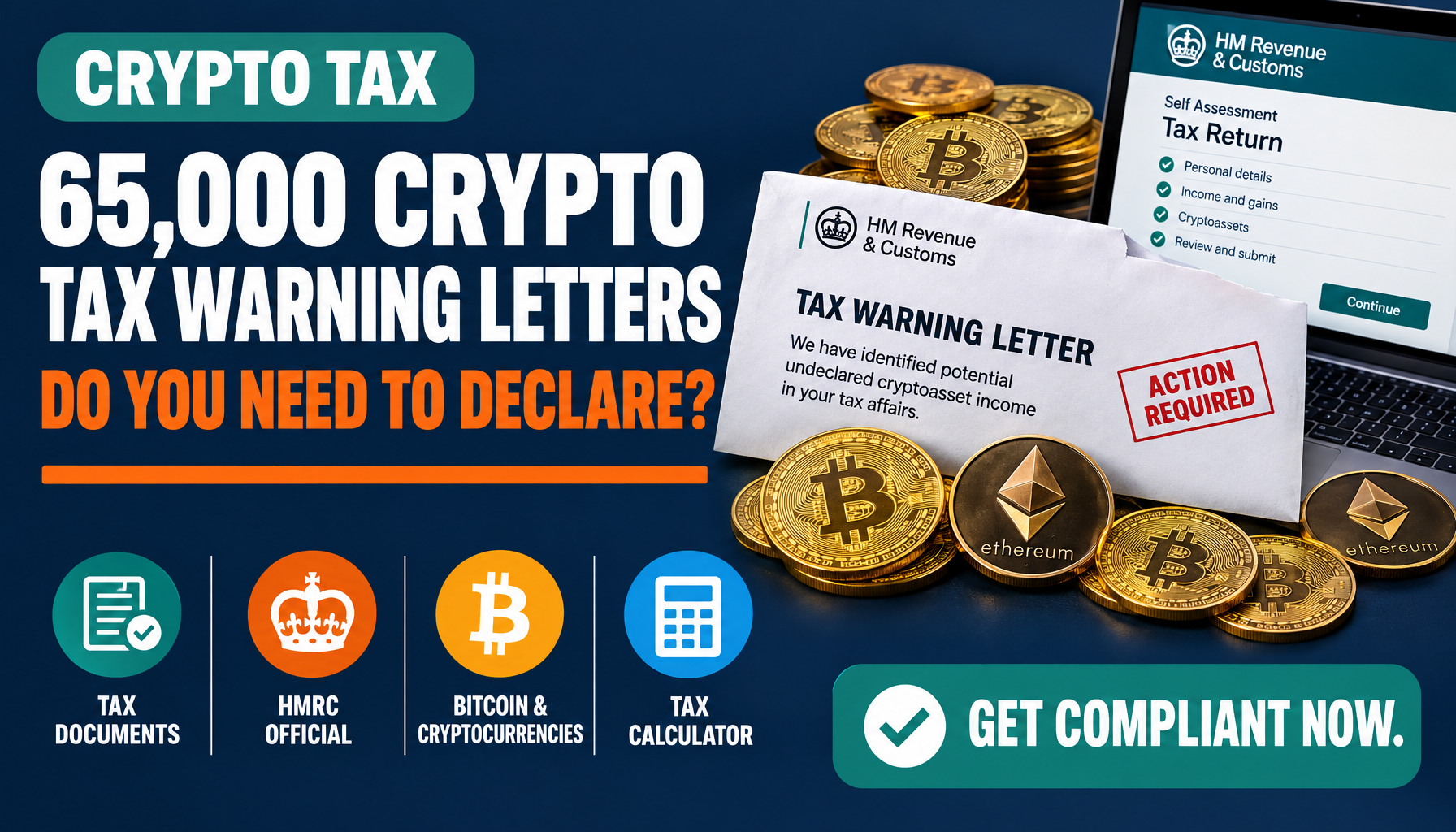
HMRC has sharply increased its focus on cryptocurrency. It sent 64,982 nudge letters to people suspected of underpaying tax on crypto dealings in the 2024/25 tax year. A letter is not automatically a bill, but it is a clear reason to check every sale, swap and crypto-related payment. All figures and rates in this article are correct as of 18 September 2026.
- A nudge letter means HMRC believes your records may not match information it holds.
- Selling, swapping or spending crypto can be a CGT disposal, even when you did not withdraw pounds.
- The 2026/27 CGT annual exempt amount is £3,000, with gains generally taxed at 18% or 24%.
- Keep exchange statements, wallet records and cost calculations, and get advice before replying if figures are unclear.
Why has HMRC written to crypto holders?
HMRC can obtain information from UK-based exchanges and match transactions to bank accounts and tax returns. From 1 January 2026, the OECD Crypto-Asset Reporting Framework is also increasing cross-border information sharing. A mismatch may arise where an exchange reports activity but a tax return does not show the resulting gain or income. Frequent trading, large or unexplained movements, overseas exchange use, staking, mining, airdrops and DeFi activity can all make a return more likely to attract questions.
HMRC normally treats buying and selling exchange tokens as an investment subject to Capital Gains Tax. Only in exceptional circumstances will an individual's activity be treated as a trade, which can bring Income Tax and National Insurance into play.
When is crypto taxable?
CGT can apply when you sell crypto for money, exchange one token for another, use tokens to buy goods or services, or give them away other than to a spouse or civil partner. Calculate the gain by comparing disposal proceeds with allowable acquisition costs and eligible transaction fees, using the pooling rules where relevant. Losses may be reported and used against gains. The annual exempt amount is £3,000 for 2026/27; taxable gains are generally charged at 18% for gains within the basic-rate band and 24% above it.
Income Tax may apply instead to employment paid in tokens, mining, staking, lending or some airdrops. The treatment depends on the facts, so do not assume that calling an activity an investment settles the question.
What should you do, and when?
If you receive a letter, do not ignore it and do not guess. Download complete transaction histories from every exchange, reconcile wallets, record sterling values on transaction dates and separate capital transactions from income. Check whether the relevant tax return was filed and whether gains, losses and crypto income were included.
The online Self Assessment deadline is 31 January following the end of the tax year. For 2025/26, that deadline is 31 January 2027. If earlier income or gains were omitted, interest and penalties may apply. HMRC's voluntary disclosure route asks you to calculate tax, interest and penalties and normally pay within 30 days of receiving a payment reference.
HMRC's rules can require disclosure for several years, depending on whether the mistake involved reasonable care, carelessness or deliberate behaviour. Take professional advice before making a disclosure, particularly where records are incomplete or a letter mentions an enquiry. See our accountancy pricing and accounting services pages for practical support.
How 360 Accounts Can Help
Our Guildford team can help you organise exchange data, calculate disposals, distinguish CGT from Income Tax and prepare an accurate Self Assessment return. We can also help you respond calmly to an HMRC nudge letter and put better records in place for future transactions.
Speak to 360 Accounts & Bookkeeping Ltd for clear, practical guidance.
Contact us today
Questions & Answers
No. It signals that HMRC has information suggesting your return may be incomplete. You should check the figures and respond accurately rather than assume the letter is either irrelevant or a final assessment.
Usually, yes. A token-to-token exchange is generally treated as a disposal at market value, even though you received no cash.
You may have no CGT to pay for 2026/27 if your net gains are within the annual exempt amount, but reporting can still be required in some circumstances. Keep full records and check the return rules.
No. They can be taxable as income when received, with a later disposal potentially creating a separate capital gain or loss. The facts and scale of the activity matter.
Combine all sources. A tax calculation based on one exchange alone can miss transfers, disposals or pooled costs. Keep evidence showing transfers between wallets are not sales.
With your authorisation, we can help review the letter, prepare calculations and communicate with HMRC where appropriate. Start by using our contact page to discuss your circumstances.