HMRC May Be Asking for Your AI Chatbot History: What Small Business Owners Need to Know
 Written by Gary Winterborne - AATQB, AATQB · Partner
HMRC May Be Asking for Your AI Chatbot History: What Small Business Owners Need to Know
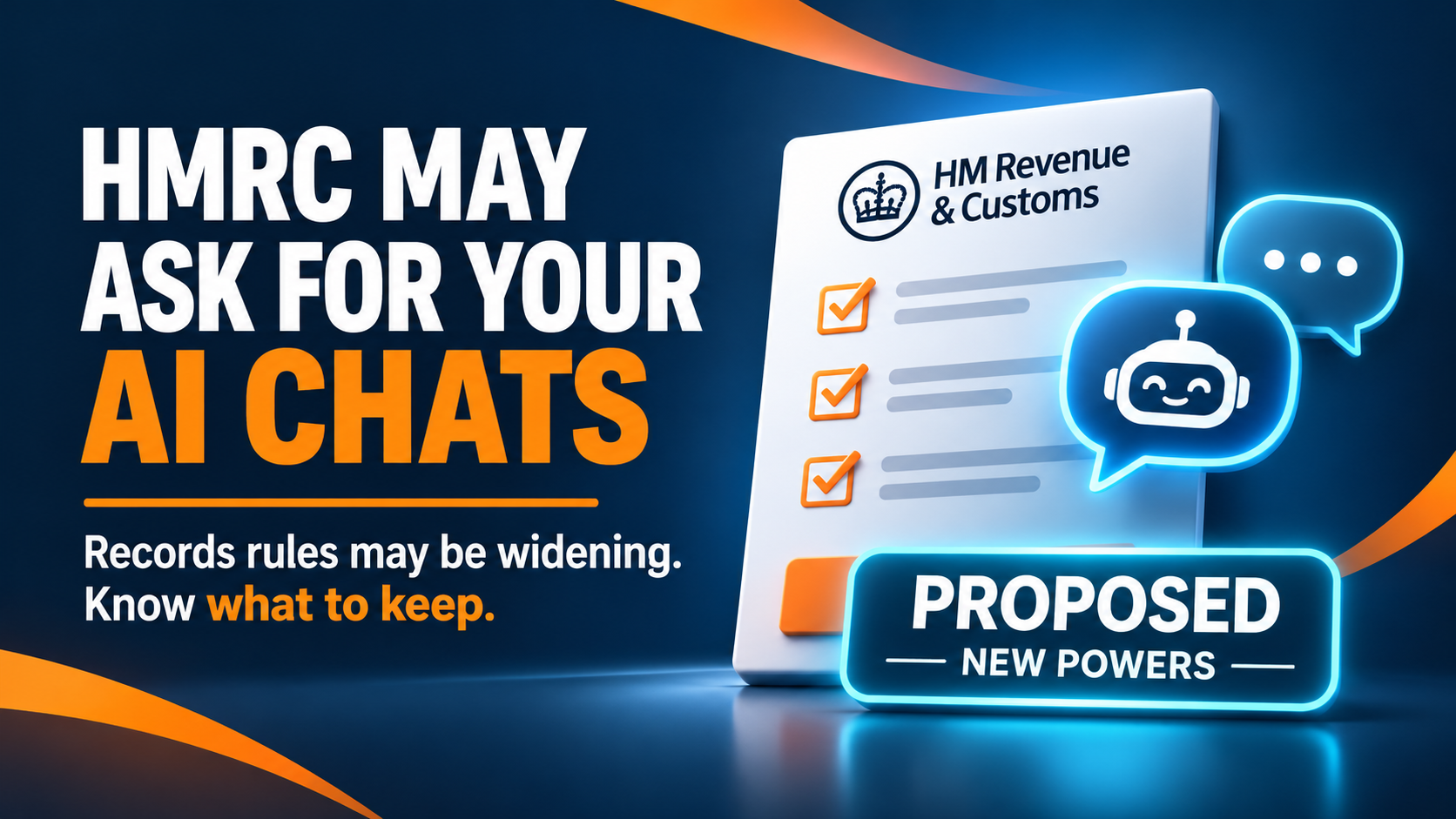
If you've ever asked an AI chatbot how to cut your tax bill, you're not alone. But there's a question many business owners haven't considered: could HMRC one day ask to read that conversation? Here's a plain-English look at what HMRC can already request, what's changing, and what sensible steps you can take now.
Key Takeaways
- HMRC can already ask for information and documents it reasonably needs to check your tax position.
- A 'document' already covers information recorded in any form, including emails, spreadsheets and digital files.
- Draft legislation for Finance Bill 2026-27 would widen what HMRC can demand to any 'relevant thing', which commentators say could include AI chatbot history.
- You can generally appeal an information notice, but not where it asks for statutory records you're legally required to keep.
- AI chatbots can give wrong or out-of-date tax information, so treat them as a starting point, not as advice.
What HMRC can already ask for
Let's start with what isn't new. Under Schedule 36 of the Finance Act 2008, HMRC can issue an information notice. This requires you to hand over information or documents that are reasonably required to check your tax position.
The word 'document' is broader than most people expect. It covers information recorded in any form. That includes paper records, but also emails, spreadsheets, accounting software files and other digital records.
So if HMRC is looking into your tax return, asking for your digital files is nothing unusual. It's been part of the rules for years.
What's changing
HMRC has published draft legislation, due to be included in Finance Bill 2026-27, that would widen the definition of what digital information it can demand. Instead of focusing on 'records' and 'documents', it would cover any 'relevant thing'.
That's a much wider net. The draft defines a 'relevant thing' as anything where information of any description can be found. It doesn't mention AI by name, but commentators say that could include things like your AI chatbot history, where you may have typed questions about your income, expenses or tax planning.
The exact detail matters here. How 'relevant thing' is defined, what limits apply and how HMRC uses the power in practice will shape how much this really affects ordinary businesses.
Check the current position
As of 12th November 2026, this isn't law yet. The Budget 2026 documents say the change will take effect from the date Finance Bill 2026-27 receives Royal Assent, and the final wording could still change. Please check the latest position on GOV.UK or with your accountant before relying on any detail of this change.
Why your chatbot chats might matter
Think about what you've typed into a chatbot. Maybe you asked whether you could claim a family holiday as a business trip. Maybe you described cash payments you hadn't recorded yet. Maybe you asked how to pay less tax next year.
Most of these questions are perfectly innocent. But taken out of context, a conversation could look different from what you actually meant. The simple rule is: don't type anything you wouldn't be comfortable having read back to you.
It's also worth remembering that chat history may be stored for a long time, often longer than you'd expect, depending on your settings and the service you use.
The bigger risk: chatbot tax advice that's wrong
Honestly, the bigger risk for most business owners isn't HMRC reading their chats. It's acting on tax information that's simply wrong.
AI chatbots can be very confident and still get things badly wrong. They may quote old rates, mix up rules from different countries, or miss details that matter to your situation. Tax rules change often, and a chatbot doesn't know your full circumstances.
If you've used a chatbot to help with your personal tax returns or expense claims, it's worth having a real person double-check before anything goes to HMRC.
Practical steps to take now
You don't need to panic or stop using AI tools altogether. They can be handy for drafting emails or getting your head around a topic. Just use them sensibly.
Your quick checklist
- Treat chatbot conversations like any other business record.
- Avoid typing sensitive figures or personal details unless you need to.
- Don't treat chatbot answers as professional tax advice.
- Keep proper, accurate records of your income and expenses.
- Check any tax decision with a qualified accountant before you act.
Good record-keeping is your best protection. If your books are tidy and your figures add up, there's far less for anyone to question. Our sole trader accounts service is designed to help with exactly that.
What happens if HMRC sends an information notice?
First, don't ignore it. Penalties can apply if you fail to comply with an HMRC information notice, so it's important to respond properly and on time.
Second, you generally have a right to appeal against an information notice. The main exception is where HMRC is asking for statutory records, meaning records your business is legally required to keep anyway.
Third, get help early. An accountant can check whether the request is reasonable, help you gather what's needed and deal with HMRC on your behalf. If you'd like peace of mind about the cost of professional help during an enquiry, take a look at our HMRC investigation insurance.
Don't miss HMRC's deadline
An information notice will set out what HMRC wants and by when. If the timing looks unrealistic, or you're not sure the request is valid, speak to an accountant straight away rather than waiting.
Your Questions Answered
Can HMRC ask for my AI chatbot history right now?
HMRC can already request documents recorded in any form if they're reasonably required to check your tax, and draft legislation for Finance Bill 2026-27 would widen this to any 'relevant thing', which could include chatbot history. The final scope will depend on the law as passed.
Is the 'relevant thing' change already law?
Not yet. As of 12th November 2026, it's in draft legislation for Finance Bill 2026-27 and will take effect from the date that Bill receives Royal Assent. Check GOV.UK or ask your accountant for the latest.
What is an HMRC information notice?
It's a formal request, made under Schedule 36 of the Finance Act 2008, asking you to provide information or documents HMRC reasonably needs to check your tax position.
Can I appeal an information notice?
Generally yes, although you can't appeal where the notice asks for statutory records your business is legally required to keep.
Should I stop using AI chatbots for my business?
Not necessarily. Just treat what you type as a business record, avoid sharing sensitive details, and don't rely on chatbot answers as tax advice.
Is tax advice from a chatbot reliable?
Not on its own. Chatbots can give inaccurate or out-of-date tax information and don't know your full circumstances, so always check with a qualified accountant.
Not sure where you stand?
If you've got a tax question, or you've been relying on a chatbot for answers, our Guildford team is happy to talk it through in plain English. Get in touch with 360Accounts.
Follow 360Accounts
Quick tax tips, deadline reminders and plain-English updates for small businesses.
Facebook Instagram LinkedIn YouTubeWEBSITE Q&A SNIPPET — DROP INTO ANY PAGE
Can HMRC ask to see my digital records?
Yes, HMRC can already ask for documents recorded in any form, including emails and spreadsheets, when they're reasonably required to check your tax.
Could HMRC ask for my AI chatbot history?
Draft legislation for Finance Bill 2026-27 would widen HMRC's powers to any 'relevant thing', which could include chatbot history, from the date the Bill becomes law.
Can I appeal an HMRC information notice?
Generally yes, except where the notice asks for statutory records your business is legally required to keep.
Should I rely on a chatbot for tax advice?
No, chatbots can give wrong or out-of-date tax information, so always check with a qualified accountant before acting.
About the author
Gary Winterborne - AATQB, AATQB · Partner
Meet Gary! From professional cricketer to business owner, Gary has enjoyed a varied career, running businesses across industries including construction and retail. His hands-on experience means he understands the challenges business owners face. Friendly, approachable and passionate about helping others succeed, Gary brings real-world business knowledge to 360 Accounts & Bookkeeping. He believes accounting should be straightforward, stress-free and focused on helping your business grow.