
HMRC Is Matching Your Card Sales and Bank Data — Is Your Bookkeeping Ready?
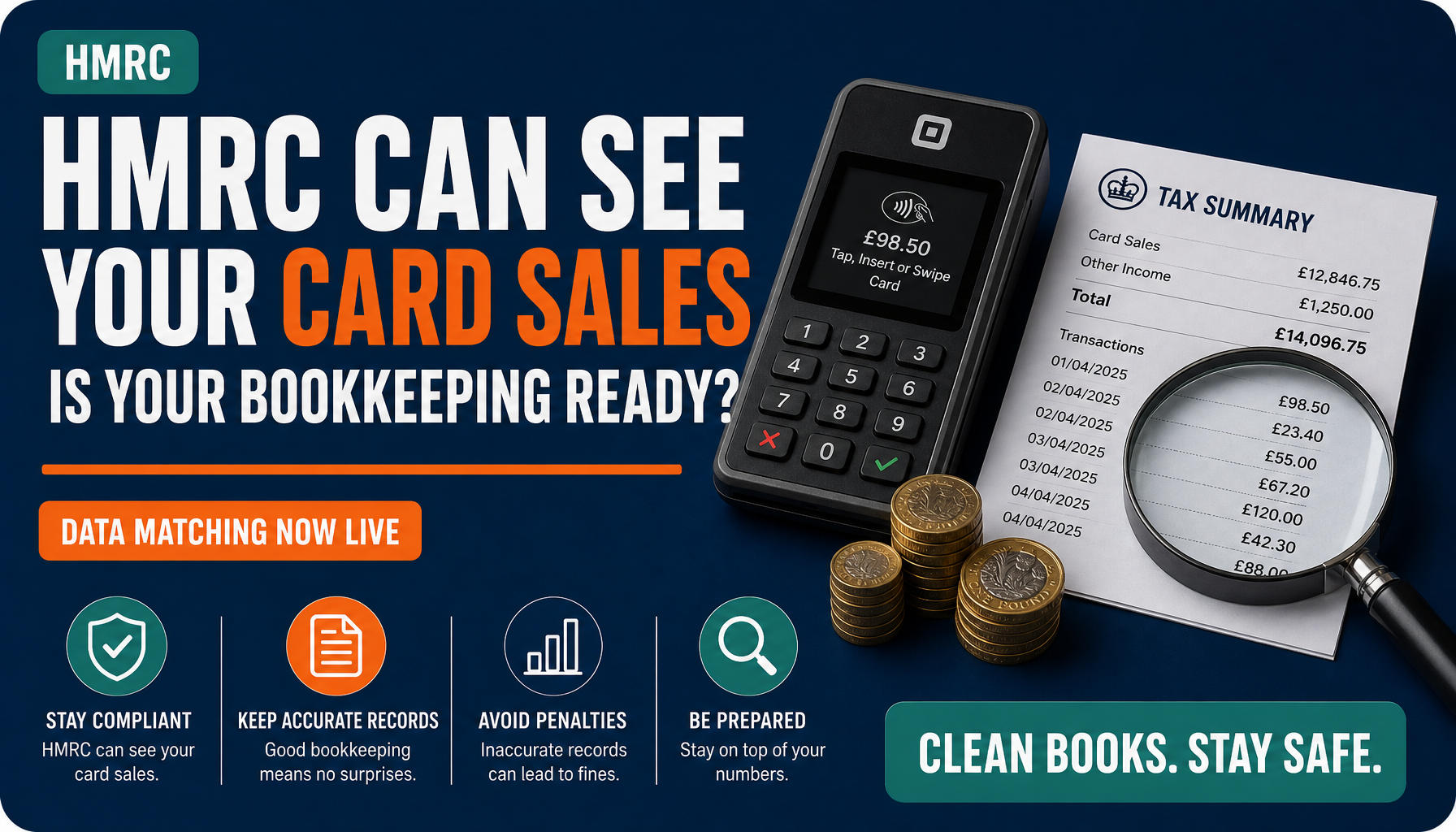
All figures and rates in this guide are correct as of 3 September 2026. HMRC is quietly building a far more detailed picture of what actually flows through your business accounts — and it's not relying solely on the figures you put on your tax return anymore. The Institute of Chartered Accountants in England and Wales (ICAEW) has responded to a technical consultation on draft legislation, part of Finance Bill 2026–27, that would improve the quality and consistency of data HMRC receives on card sales and bank interest income. In plain terms: HMRC is getting better data from payment processors like Stripe, Square, SumUp, PayPal and Zettle, and from banks, so it can cross-check what you declare against what's actually landing in your account.
- HMRC is improving how it receives card sales data from payment processors and interest income data from banks under Finance Bill 2026–27.
- The technical consultation on this legislation closes on 7 September 2026.
- ICAEW has raised concerns about using National Insurance numbers as identifiers, tight implementation timescales, and error correction processes.
- Any mismatch between your declared income and the data HMRC receives could trigger a compliance check or enquiry.
- Clean, accurate bookkeeping is now your best defence — not just good practice.
What's Actually Changing
Payment processors already report some transaction data to HMRC. The new legislation aims to make that data more consistent and reliable across providers, and to do the same for bank interest income. This means HMRC's systems will be able to compare, more accurately than ever, the total card takings and interest a business or individual reports against what its bank and payment provider records show. Where the numbers don't line up, HMRC is more likely to open a compliance check or a full enquiry.
This matters most if you take card payments through Stripe, Square, SumUp, PayPal, Zettle or similar providers, or if your business holds savings that generate interest. If your bookkeeping and your bank statements don't tell the same story, that gap is exactly what modern data matching is designed to find.
What You Should Do Now
- Reconcile regularly — match your bookkeeping records against your bank and payment processor statements every month, not just at year end.
- Record all income streams — card sales, cash, bank transfers and interest should all be captured consistently in your accounting software.
- Fix discrepancies promptly — if a figure looks wrong, correct it as soon as you spot it rather than leaving it for your accountant to untangle later.
- Keep evidence — retain statements, invoices and processor reports so you can explain any figure HMRC queries.
Watch Out
- Consultation closes 7 September 2026 — the draft legislation is still being finalised, but the direction of travel is clear: more data, matched more precisely.
- National Insurance number identifiers — ICAEW has flagged concerns that using NI numbers to match data could cause errors for people with multiple income sources or joint accounts.
- Tight implementation timescales — businesses may have limited time to adjust once the legislation is finalised.
- Enquiries can go back years — HMRC can request records going back several years, so historic gaps in bookkeeping could resurface.
How 360Accounts Can Help
We help sole traders, small businesses and limited company directors keep their bookkeeping accurate and up to date, so there are no surprises if HMRC comes knocking. If you take card payments, our VAT services team can help make sure your sales records reconcile cleanly against your processor statements. For company directors managing limited company accounts, and sole traders preparing for Making Tax Digital, now is the time to tighten up your records before this legislation takes effect. If you're at all concerned about an HMRC compliance check, our HMRC investigations and compliance support service can guide you through it.
Not sure your bookkeeping would stand up to an HMRC data match?
Book a Free CallQuestions & Answers
What data is HMRC receiving about my business?
Under proposals in Finance Bill 2026–27, HMRC is aiming to receive more consistent and detailed data from payment processors on card sales, and from banks on interest income. This is in addition to information HMRC already holds from other sources. See our bookkeeping services for help keeping your own records aligned.
Can HMRC see my card payments?
Payment processors such as Stripe, Square, SumUp, PayPal and Zettle already share some transaction data with HMRC, and the new legislation aims to make this data more consistent and easier to match against tax returns. If your declared turnover doesn't match your processor records, this is exactly the kind of discrepancy the new rules are designed to catch.
What should I do if my records don't match HMRC's data?
Reconcile your bookkeeping against your bank and processor statements as soon as possible, correct any errors you find, and keep clear evidence for anything unusual. If you've already received a query from HMRC, our compliance support service can help you respond correctly.
Does this affect sole traders or just limited companies?
It affects both, plus small businesses and partnerships. Any business taking card payments or earning bank interest could be affected. Sole traders should pay particular attention given the parallel rollout of Making Tax Digital for Income Tax, which also increases the frequency of reporting to HMRC.
What is the Finance Bill 2026–27 data consultation about?
It's a technical consultation on draft legislation intended to improve the quality and consistency of third-party data HMRC receives, specifically around card sales and bank interest income. ICAEW has responded raising concerns about identifier accuracy, implementation timescales and error correction. The consultation closes on 7 September 2026.
How can 360Accounts help me prepare?
We review your bookkeeping processes, reconcile your records against bank and processor data, and flag discrepancies before HMRC does. See our pricing or get in touch to arrange a review.