HMRC Wants Your Tax Money Earlier? What It Could Mean for Small Businesses
 Written by Gary Winterborne - AATQB, AATQB · Partner
HMRC Wants Your Tax Money Earlier? What It Could Mean for Small Businesses
Paying HMRC earlier. That's the worry doing the rounds among small business owners. So should you panic? No. But it's a good moment to understand how and when you pay tax today, and to make sure your cash flow could cope if the timing ever changed.
Key Takeaways
- Under current law, sole traders, landlords and small companies are not required to pay tax in-year or quarterly.
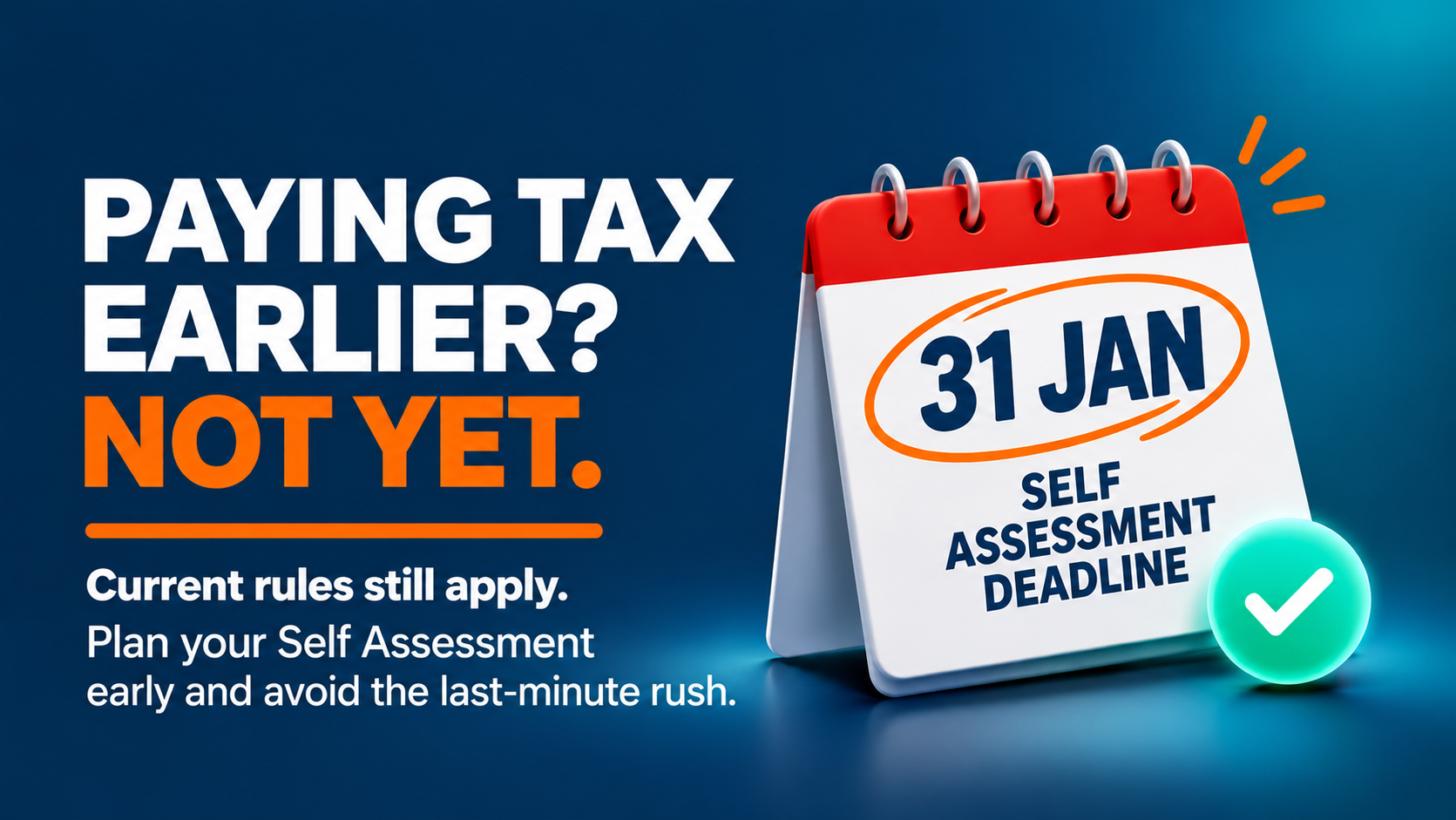
- Self Assessment tax is usually paid by 31 January and 31 July through payments on account.
- Most small limited companies pay Corporation Tax 9 months and 1 day after their year end.
- Making Tax Digital for Income Tax means quarterly updates, not quarterly payments, under current rules.
- Moving a slice of every payment into a separate tax account protects you whatever the timing.
Why is everyone talking about paying tax earlier?
From time to time there's discussion about whether tax should be collected closer to when income is actually earned. That kind of talk naturally makes business owners nervous, because paying earlier would mean less cash in the bank at any given moment.
But let's be clear. Talk, ideas and consultations are not the law. As of 17th November 2026, there is no requirement for small businesses, sole traders or landlords to pay income tax or Corporation Tax in-year or quarterly. If that ever changes, it would be a future change, and there would normally be notice before it took effect.
So the sensible response isn't worry. It's preparation.
How Self Assessment payments work right now
If you're a sole trader or landlord, you pay income tax through Self Assessment, your yearly tax return. Many people pay in two instalments called payments on account, each normally half of the previous year's bill. Any remaining tax is then settled with a balancing payment.
Here's how the timing looks for the 2026/27 tax year, as of 17th November 2026:
Key dates to note
31 January 2027: balancing payment for 2025/26, plus your first payment on account for 2026/27. 31 July 2027: second payment on account for 2026/27. 31 January 2028: balancing payment for 2026/27. January can be a big month, especially in your first years of trading, when the balancing payment and first payment on account land together.
Not everyone has to make payments on account. As of 17th November 2026, they're generally not needed if your last Self Assessment bill was under £1,000, or if more than 80% of your tax was already taken at source, for example through PAYE. Please check these thresholds with us or on GOV.UK before relying on them. Our personal tax returns service can work out exactly what you owe and when.
What about limited companies?
If you run a limited company that isn't classed as 'large', you usually pay Corporation Tax 9 months and 1 day after the end of your accounting period. That gap gives many small companies valuable breathing space.
Larger companies already pay in quarterly instalments, so the idea of paying during the year isn't new to the tax system. It just doesn't apply to most small companies under current rules.
The risk for directors is getting comfortable with that nine-month gap and treating the money as spare. If the timing ever tightened, a business relying on that cushion would feel it quickly.
Doesn't Making Tax Digital change all this?
It's an easy mix-up. Making Tax Digital for Income Tax applies from 6 April 2026 to sole traders and landlords with qualifying income over £50,000. It means keeping digital records and sending quarterly updates to HMRC.
But as of 17th November 2026, those updates don't change when you pay. Your payment dates stay the same. The government has announced plans to bring in people with income over £30,000 from April 2027 and over £20,000 from April 2028, so it's worth checking whether you'll be affected. Our Making Tax Digital for Income Tax support can help you get set up.
One bonus: quarterly updates give you a regular view of your profits, which makes planning for tax far easier.
The biggest mistake: spending HMRC's money
Here's the mistake we see most often. Money comes in, the bank balance looks healthy, and it gets spent. Then the tax bill arrives and part of that money was never really yours.
The fix is simple. Every time you get paid, move a slice into a separate tax account. Then whatever the timing, the cash is sitting there ready.
Your cash-flow checklist
- Open a separate savings account just for tax.
- Move a set percentage of every payment in as soon as it arrives.
- Ask your accountant to help you pick the right percentage for your income.
- Review the amount every quarter as your profits change.
- Note your payment dates in your calendar with a reminder a month ahead.
How to get ahead now
You don't need to wait for HMRC to change anything. Getting ahead now means less stress in January and a business that could cope with tighter timings if they ever came.
Start with up-to-date bookkeeping. If you know your profits as you go, you know your likely tax bill too. Our sole trader accounts service keeps your figures current so there are no surprises.
And if you expect your income to drop this year, you may be able to ask HMRC to reduce your payments on account. Just be careful: reducing them too far can lead to interest if you end up owing more.
Your Questions Answered
Do I have to pay my tax earlier now?
No. As of 17th November 2026, there's no requirement for sole traders, landlords or small companies to pay tax in-year or quarterly.
What are payments on account?
They're two advance payments towards your Self Assessment bill, due by 31 January and 31 July, each normally half of the previous year's bill.
When do small limited companies pay Corporation Tax?
Companies that aren't classed as large usually pay 9 months and 1 day after the end of their accounting period.
Does Making Tax Digital mean paying tax quarterly?
No. Under current rules it means sending quarterly updates, but your payment dates stay the same.
How much should I set aside for tax?
It depends on your profits and circumstances, so it's best to work out a percentage with your accountant and review it regularly.
Why is my January tax bill so high?
January often includes both your balancing payment for the previous year and your first payment on account for the current year.
Not sure where you stand?
Our Guildford team can explain your payment dates and help you work out what to set aside, so tax never catches you short. Get in touch with 360Accounts.
Follow 360Accounts
Quick tax tips, deadline reminders and plain-English updates for small businesses.
Facebook Instagram LinkedIn YouTubeWEBSITE Q&A SNIPPET — DROP INTO ANY PAGE
Do small businesses have to pay tax quarterly?
Under current law, sole traders, landlords and small companies are not required to pay income tax or Corporation Tax in-year or quarterly.
When are Self Assessment payments on account due?
Payments on account are due by 31 January and 31 July, and each is normally half of the previous year's Self Assessment bill.
Does Making Tax Digital change when I pay tax?
Under current rules, Making Tax Digital for Income Tax requires quarterly updates but does not change your tax payment dates.
What's the best way to make sure I can pay my tax bill?
Move a set percentage of every payment you receive into a separate tax account so the money is ready whenever the bill is due.
About the author
Gary Winterborne - AATQB, AATQB · Partner
Meet Gary! From professional cricketer to business owner, Gary has enjoyed a varied career, running businesses across industries including construction and retail. His hands-on experience means he understands the challenges business owners face. Friendly, approachable and passionate about helping others succeed, Gary brings real-world business knowledge to 360 Accounts & Bookkeeping. He believes accounting should be straightforward, stress-free and focused on helping your business grow.