
HMRC's Side Hustle Crackdown: What Every Sole Trader Needs to Know in 2026
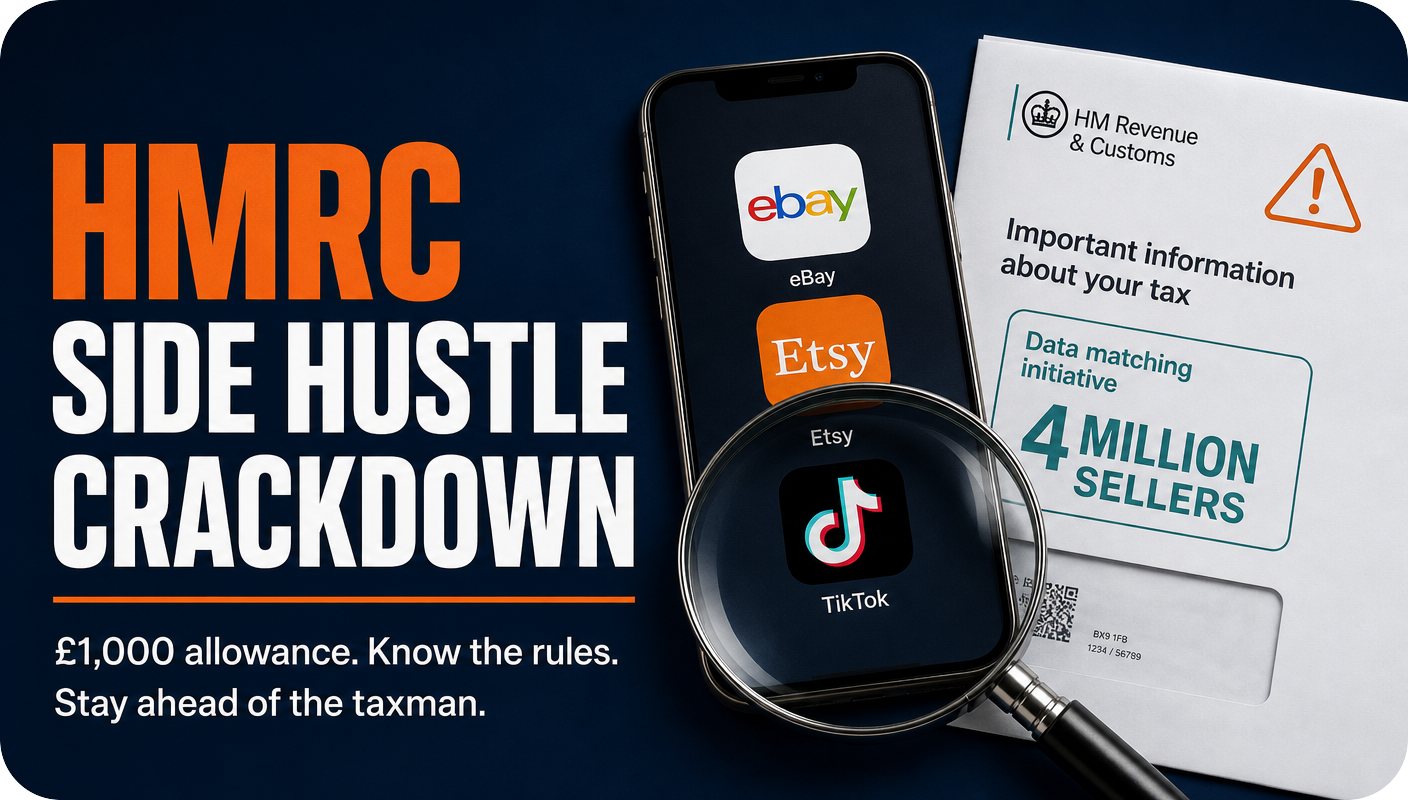
Millions of people in the UK earn money on the side — selling on eBay, renting a room on Airbnb, freelancing at weekends, or creating content on TikTok. For years, many assumed that small amounts simply did not count. HMRC is now making clear that they do. In 2026, the tax authority has received data on nearly 4 million online sellers and is actively sending letters to those who may not have declared their earnings. Here is what you need to know — and what to do about it.
- You can earn up to £1,000 per year from side hustles before you need to report anything to HMRC
- Above £1,000, you must register for Self Assessment — even if you pay no tax
- HMRC now receives income data directly from eBay, Airbnb, Etsy, TikTok and other platforms
- Your total tax-free income for 2026/27 is £13,570 (personal allowance)
- If you received an HMRC letter, you must respond — ignoring it will not make it go away
The Numbers You Need to Know
What Is the Trading Allowance?
The trading allowance is a straightforward tax-free amount that covers income from self-employment, selling goods, or providing services on the side. For 2026/27 it remains at £1,000 gross. That means the total amount you receive — before any expenses — across all your side hustles combined.
If your total side hustle income is below £1,000 for the year, you do not need to tell HMRC anything. No return, no registration, no tax. The moment you go above that figure — even by a single pound — the rules change.
If you earn more than £1,000, you have two options: claim the flat £1,000 allowance and pay tax on the rest, or work out your actual allowable expenses and deduct those instead. For most casual sellers the trading allowance is simpler; for those with genuine business costs, calculating actual expenses may produce a lower tax bill.
What About Your Personal Allowance?
Your personal allowance — the total income you can receive before paying any income tax — is £13,570 for 2026/27. This covers all your income combined: your salary, freelance earnings, online sales profits, rental income, and anything else. If everything you earn stays below £13,570, you will not pay income tax. But you may still need to file a Self Assessment return even if no tax is due.
If your side hustle gross income exceeds £1,000 in any tax year, you must register for Self Assessment by 5 October following that tax year — whether or not you end up owing any tax. Missing this deadline can lead to automatic penalties, even if your final tax bill is zero.
Why Is HMRC Cracking Down Now?
Since January 2024, digital platforms have been legally required to report seller data to HMRC. Any seller who completes more than 30 transactions or earns more than £1,700 per year on a platform is reported automatically. By 2026, HMRC had accumulated data covering around £55 billion in transactions — roughly double the previous year. Armed with this information, the tax authority has begun sending targeted letters to side hustlers who may not have declared their earnings correctly.
- eBay — second-hand goods, collectables, clothing
- Etsy — handmade goods, crafts, digital downloads
- Airbnb — room and property rentals
- TikTok — creator fund payments, gifts, brand deals
- Vinted, Depop, Amazon Marketplace, Fiverr, and others
I Received a Letter From HMRC — What Do I Do?
HMRC letters about undeclared income are part of a deliberate, data-led campaign. They are not random. If you have received one, it means HMRC has a specific reason to contact you — usually because platform data suggests income that does not appear on any return they can find. Do not ignore it.
- Read it carefully and note any deadline given
- Gather your records — what did you earn, and in which tax years?
- Work out whether your income fell below the £1,000 trading allowance
- If you owe tax, you can often declare and pay voluntarily (with reduced penalties)
- Speak to an accountant — a quick conversation can save significant stress and cost
Key Deadlines
- 5 October: Register for Self Assessment if your side income exceeded £1,000 last tax year
- 31 January: File your Self Assessment return online and pay any tax owed
- Personal allowance freeze: The £13,570 threshold is frozen until 2031 — meaning more people will be dragged into paying tax as earnings rise with inflation
Expenses You Can Claim
If you choose not to use the flat £1,000 trading allowance and instead declare your actual profits, you can reduce your tax bill by claiming allowable expenses. These might include:
- Postage and packaging — for goods you sell and send
- Equipment and tools — cameras, computers, craft supplies
- Software and subscriptions — editing tools, listing platforms
- Home working costs — a fair proportion of broadband and utilities
- Platform fees — commissions taken by eBay, Etsy, etc.
Keep receipts for everything. Even if you do not file a return this year, good records will protect you if HMRC asks questions later.
How Does This Affect You?
If you run a registered sole trader business alongside other income, you are likely already familiar with Self Assessment. Make sure your side income is captured correctly and that platform payments are not being missed from your records. If you are new to self-employment or have been earning on the side without registering, now is the time to get this sorted before HMRC contacts you first.
Voluntary disclosure — coming forward before HMRC contacts you — typically results in lower penalties than being caught. If you think you may have undeclared income from previous years, speaking to an accountant sooner rather than later is almost always the better option.
Not sure where you stand?
360Accounts helps sole traders and small businesses in Guildford and across Surrey stay on top of their tax obligations. If you have side income you are unsure about, we can help you get it right — quickly and without the jargon.
Talk to 360Accounts