
HMRC Is Sending 1.8 Million "Simple Assessment" Letters — Are You Getting One?
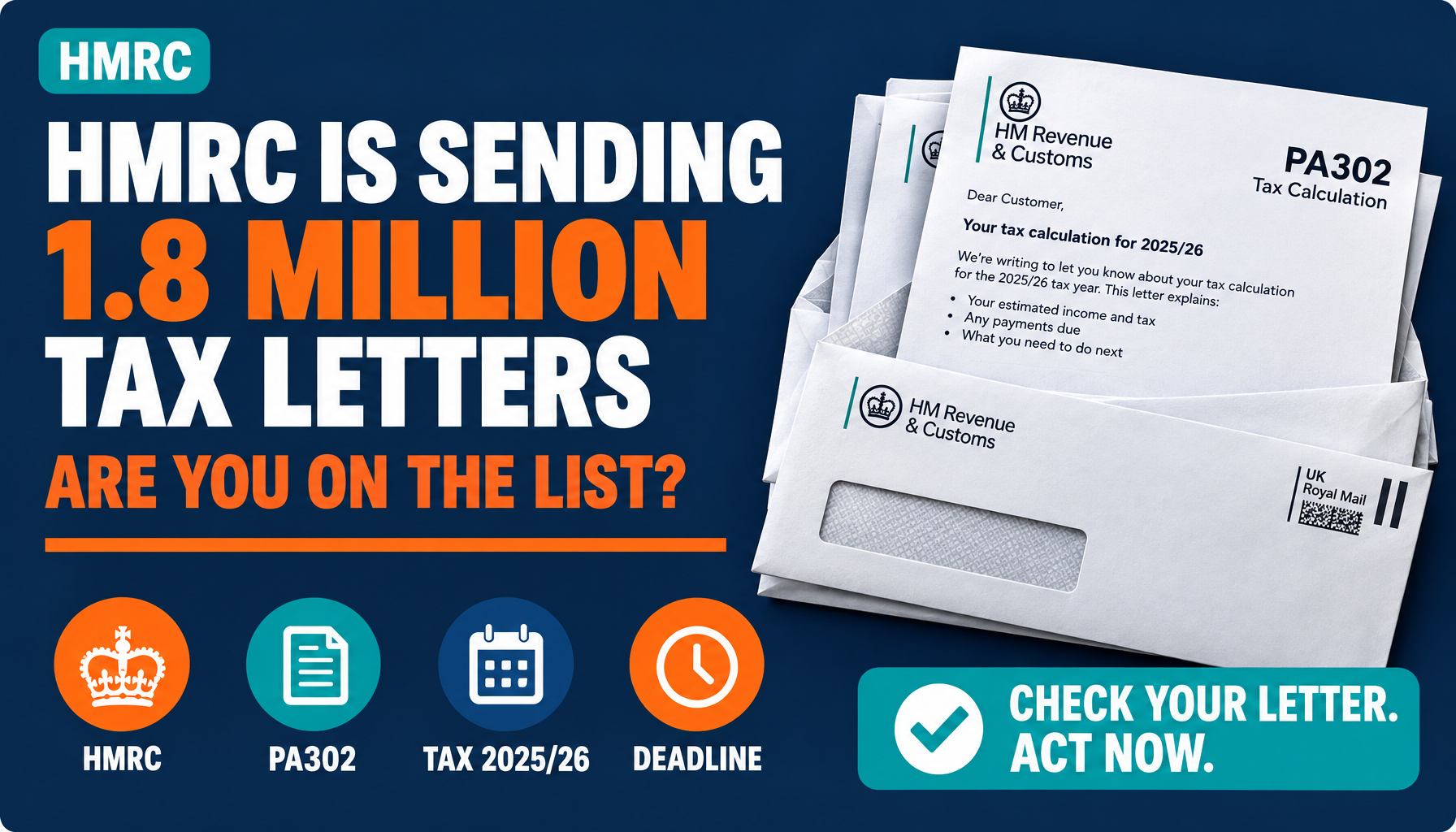
HMRC Is Sending 1.8 Million "Simple Assessment" Letters — Are You Getting One?
If a brown envelope from HMRC lands on your doormat this year, don't panic — but don't ignore it either. HMRC is sending out 1.8 million Simple Assessment letters for the 2025/26 tax year, and the odds of one reaching your address have never been higher. All figures and rates in this guide are correct as of 16 September 2026.
- HMRC is issuing 1.8 million Simple Assessment (PA302) letters for 2025/26 — up from 675,000 in 2021/22.
- A Simple Assessment is not a penalty, fine or investigation — it's HMRC's calculation of tax you owe based on data it already holds.
- You have until 31 January 2027 to pay, unless your letter states a different date.
- If you think the figures are wrong, you must contact HMRC within 60 days of the letter's date.
- Rising savings interest and the frozen personal allowance mean far more ordinary savers and employees are being caught.
What Is a Simple Assessment Letter?
Unlike a Self Assessment return, you don't fill anything in — HMRC does the sums and asks you to check the figures and pay what's due.
Who Is Getting One?
HMRC is targeting five groups of people with these letters:
- Those with savings or dividend income above their tax-free allowances.
- People with untaxed second income, such as casual or freelance earnings.
- Pensioners whose pension income means tax is owed.
- Anyone who received more tax-free personal allowance than they were entitled to.
- Cases where tax simply can't be collected through a tax code — typically where £3,000 or more is owed.
Working-age customers began receiving letters from 30 June 2026, with pensioners following from 12 August 2026. A second wave, based on bank interest data, goes out October–December 2026 — so don't assume you're clear if nothing has arrived yet.
Is Your Bill Correct?
Check the letter against your own records — P60s, bank interest certificates and pension statements. Mistakes do happen, particularly where bank-reported interest doesn't match what you actually received. If you run a business too, it's worth keeping your sole trader accounts in good order so you can cross-reference figures quickly.
When and How to Pay
As HMRC's Chief Customer Officer, Myrtle Lloyd, put it: "If you receive a Simple Assessment letter and have tax to pay, please don't ignore it."
Why More People Are Getting Letters Than Ever
The surge isn't a coincidence. Non-ISA savings accounts earning above the Personal Savings Allowance have rocketed by 1,047% since 2018 — from 462,000 to 5.3 million today, as higher interest rates turn modest savings pots into real taxable income.
The Personal Savings Allowance remains £1,000 for basic-rate taxpayers, £500 for higher-rate, and £0 for additional-rate. At 4% interest, a basic-rate taxpayer needs around £25,000 in savings to breach it — a higher-rate taxpayer needs just £12,500. Add a personal allowance frozen at £12,570, and more people are being dragged into tax than ever, often without realising it.
How 360 Accounts Can Help
Need help checking a Simple Assessment calculation or understanding your savings tax position? Our team is here. Explore our HMRC Investigation Insurance for extra peace of mind, or get in touch for a straightforward review.
Received a letter and not sure what to do next? Let's take a look together.
Book a CallSee our pricing for personal tax support, or explore our full personal taxation services.
Do I need to file a Self Assessment tax return if I get a Simple Assessment letter?
No. A Simple Assessment is a separate, simpler process. HMRC calculates the tax for you using data it already holds, so you don't need to complete a Self Assessment return for the income covered by the letter.
What if I can't afford to pay the bill by 31 January 2027?
Contact HMRC as soon as possible to discuss a "Time to Pay" arrangement, which lets you spread the cost in instalments. Don't wait until after the deadline — the earlier you contact HMRC, the more flexibility you're likely to get.
How do I know if the figures on my Simple Assessment letter are correct?
Compare the letter against your own records, including bank interest certificates, pension statements and P60s. If anything looks wrong, contact HMRC within 60 days of the letter's date to query it — after that, the assessment becomes much harder to change.
I have savings — could I owe tax on the interest?
Possibly. Your Personal Savings Allowance is £1,000 if you're a basic-rate taxpayer, £500 if you're higher-rate, and £0 if you're additional-rate. With interest rates around 4%, it takes as little as £12,500 in savings for a higher-rate taxpayer to breach their allowance, so more savers are being caught than ever before.
Can HMRC take money directly from my wages or pension instead?
In some cases, yes — where the amount owed is under £3,000, HMRC can often collect it automatically by adjusting your tax code rather than issuing a Simple Assessment letter. Letters are typically sent when the amount is £3,000 or more, or where the tax code route isn't available.