
How to Improve Your Business Credit Score
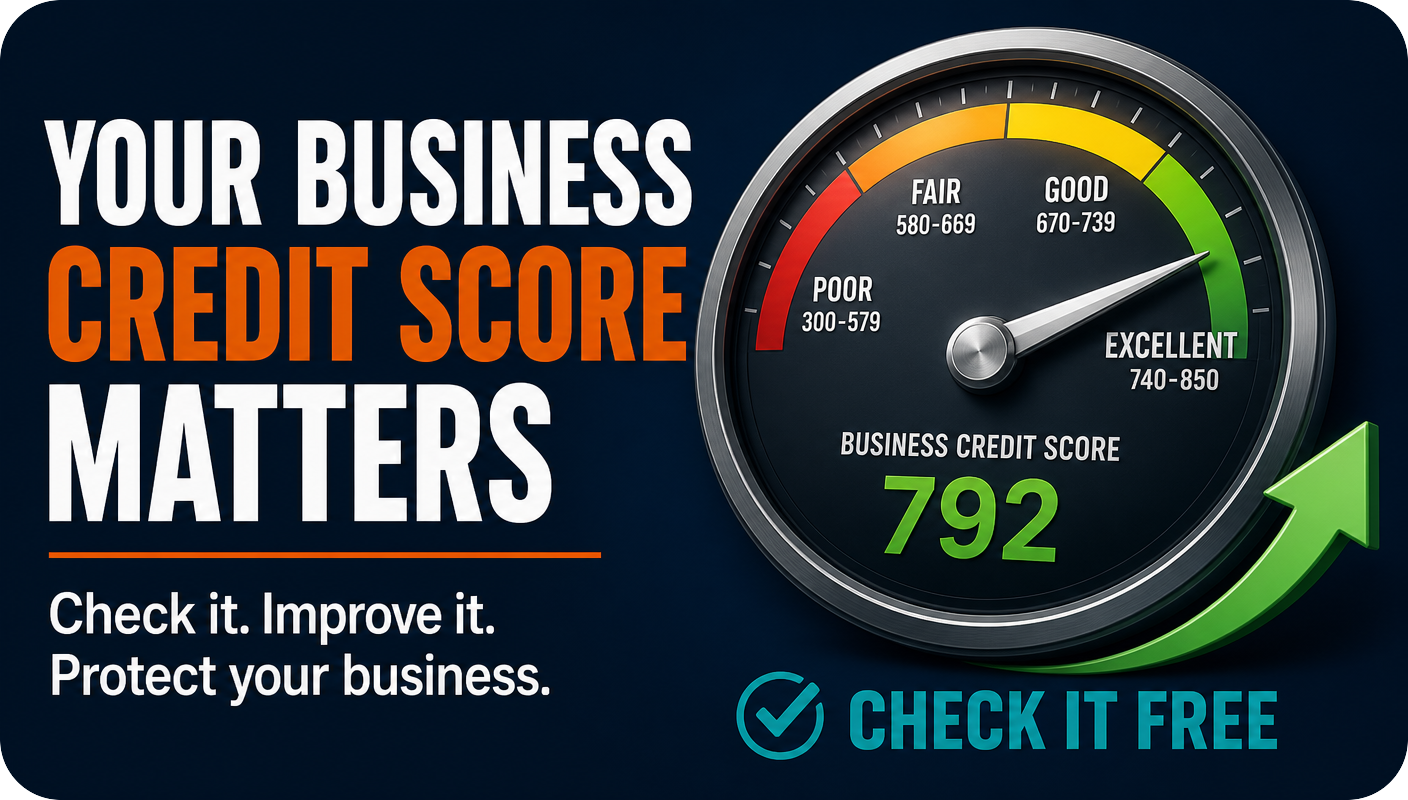
How to Improve Your Business Credit Score
Ask most small business owners about their business credit score and you'll get a blank look — yet it's quietly influencing whether suppliers offer you 30-day terms, whether a lender says yes to a loan, and how much a leasing company charges you for a van. All figures and information in this guide are correct as of 24 August 2026.
- Every UK limited company (and many sole traders) has a business credit score, whether you've checked it or not.
- Late payments, CCJs, and overdue Companies House filings are the biggest score-killers.
- You can check your score for free with Experian, Equifax, or Creditsafe.
- Filing accounts and confirmation statements on time is one of the easiest wins available.
- A strong score can unlock better credit terms, lower interest rates, and faster supplier onboarding.
What Is a Business Credit Score?
A business credit score is a rating — typically 0 to 100, or a letter/band grade — produced by credit reference agencies such as Experian, Equifax, Creditsafe, and Dun & Bradstreet. It estimates how likely your business is to pay its debts on time, and lenders, suppliers, landlords, and even large customers use it to decide whether to extend credit and on what terms.
What Affects Your Score?
Several factors feed into the algorithm behind your rating:
- Payment history — paying suppliers and finance agreements on time is the single biggest factor.
- County Court Judgments (CCJs) — even a small unpaid CCJ can badly damage your score for years.
- Credit utilisation — consistently maxing out overdrafts or credit lines signals financial strain.
- Companies House filings — late or overdue accounts and confirmation statements are a red flag to credit agencies.
- Company age and financial trend — longevity and improving turnover/profit both help.
- Industry risk — some sectors are scored more cautiously than others.
How to Check Your Score
You can get a free snapshot of your business credit score directly from Experian, Equifax, or Creditsafe. It's worth checking all three, as scores and the underlying data can vary between agencies — and errors (like an old CCJ that's since been settled) are more common than you'd think.
Practical Steps to Improve Your Score
The good news is that a poor score isn't permanent. Here's where to focus:
- File your accounts and confirmation statement with Companies House on time, every time.
- Pay suppliers and finance agreements promptly — set up automated reminders or direct debits.
- Keep credit utilisation below 50–60% of your available limits where possible.
- Resolve any outstanding CCJs within 30 days — a satisfied CCJ within this window is often removed from the register entirely.
- Keep your bookkeeping and management accounts up to date, as accurate financial data supports a stronger risk profile.
Good bookkeeping is one of the most underrated tools for protecting your score — timely, accurate records mean you catch cash flow issues early, before they become missed payments.
Does every business have a credit score?
Yes — credit reference agencies generate a score for almost every UK limited company automatically, using data from Companies House, court records, and trade payment data. Sole traders may have a less formal profile, often tied more closely to the owner's personal credit history.
How quickly can I improve a poor score?
Some fixes, like filing overdue Companies House paperwork, can improve your score within weeks. Others, like building a track record of on-time payments, take several months of consistent good behaviour to show up meaningfully.
Can a CCJ be removed from my record?
If you pay a CCJ in full within one month of the judgment, you can apply to the court to have it removed from the register entirely. If it's paid later, it will show as "satisfied" but will remain visible for six years.
Does being a new company automatically mean a low score?
Often, yes — agencies have less data to work with, so new companies typically start with a cautious, mid-range score. This improves naturally as you build a filing and payment track record, which is why getting the basics right from day one matters.
Does my credit score affect the interest rates I'm offered?
Yes. Lenders use your business credit score to price risk, so a stronger score typically means access to lower interest rates, higher borrowing limits, and faster approval on business loans and asset finance.
Should sole traders worry about this too?
Absolutely. Suppliers, landlords, and lenders will often check a sole trader's personal and business credit history before extending terms, so the same good habits — timely payments, low utilisation, accurate records — apply just as much.
Keep Your Filings & Finances in Great Shape
Whether you're a sole trader, small business, or limited company, our team can keep your bookkeeping, accounts, and Companies House filings on track — protecting the credit score your business relies on.
Book a Free CallExplore more: Limited Company Accounts • Sole Trader Accounts • Accounting Software • Pricing