
Making Tax Digital for Income Tax Is Now Live — Is Your Business Ready?
 Gary Winterborne - AATQB, AATQB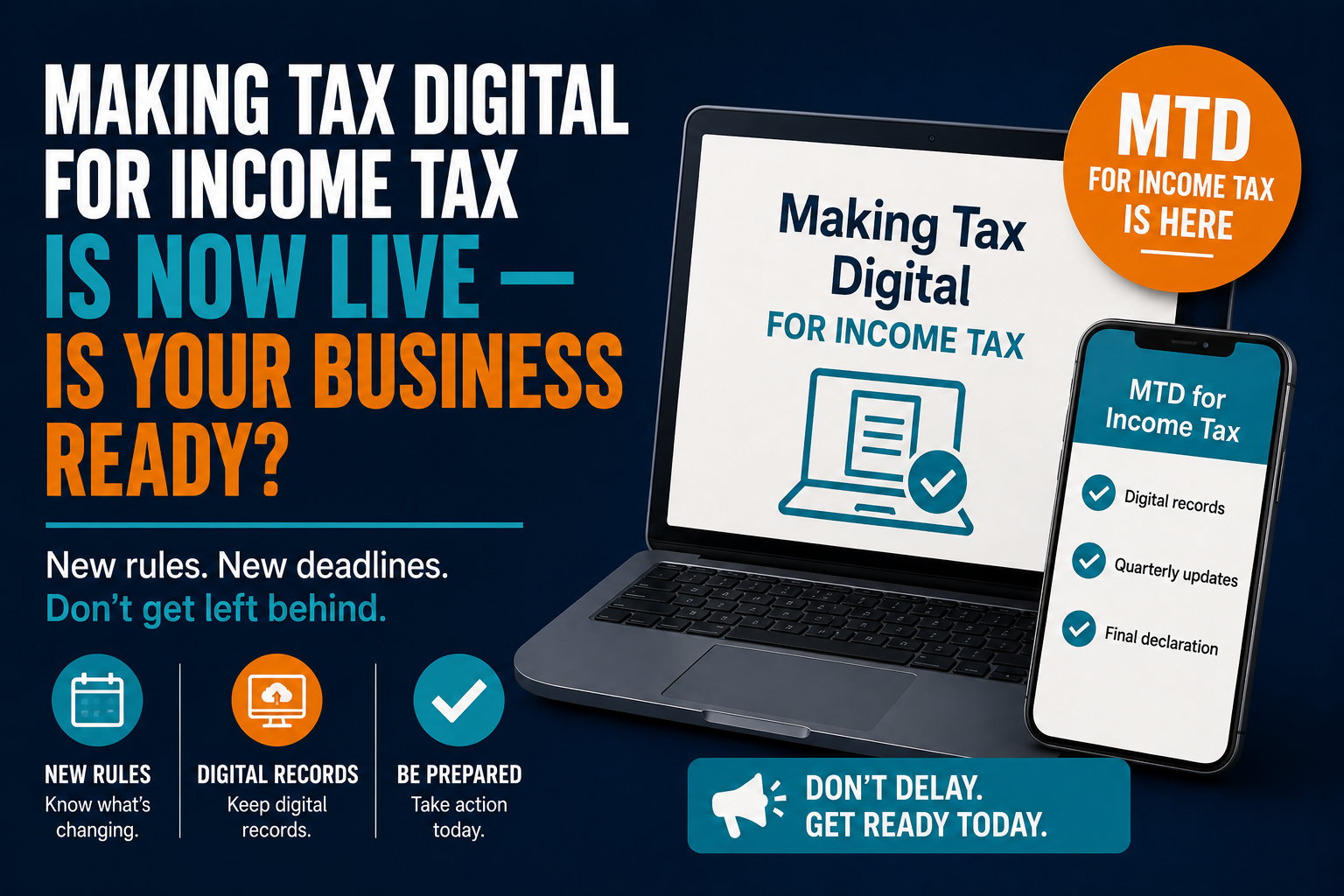
One of the most significant changes to UK tax administration in a generation came into effect on 6 April 2026 — and for many sole traders and landlords, the clock is already ticking. Making Tax Digital for Income Tax Self Assessment (MTD ITSA) is now law. If your total self-employment and property income exceeds £50,000, you are no longer just preparing for this change: you are legally required to comply with it right now. The first quarterly reporting deadline falls in August 2026, and HMRC expects full compliance from day one.
If you have not yet signed up, switched to compatible software, or received confirmation from your accountant that everything is in order, this article explains exactly what is happening, what it means for your business, and what steps to take immediately.
What Is MTD for Income Tax and What Has Changed?
Under the old system, sole traders and landlords reported their income once a year through a Self Assessment tax return, with a filing deadline of 31 January. That system is not going away entirely — but it is being substantially overhauled for anyone caught by the new rules.
Under MTD ITSA, you must now:
- Keep digital records of all your self-employment and property income and expenses, using software that is compatible with HMRC’s systems.
- Submit quarterly updates to HMRC four times per tax year, summarising your income and expenses for each three-month period.
- File a final declaration (replacing the traditional Self Assessment return) by 31 January the following year, confirming your full income picture for the year.
HMRC does not provide software for this — you must source your own from the list of approved MTD-compatible providers, which includes well-known platforms such as QuickBooks, Xero, FreeAgent and others.
Who Is Affected Right Now?
The threshold for the current phase is clear: if your qualifying income from self-employment and/or property rental combined exceeds £50,000 per year, you must already be using MTD ITSA. This applies whether you are a freelancer, contractor, tradesperson, or landlord — and it applies even if only part of your income comes from self-employment.
It is also worth knowing that future phases will lower the threshold further. From April 2027, the requirement will extend to those with qualifying income above £30,000, and discussions around a further reduction to £20,000 are ongoing. So even if you fall below the current threshold, the direction of travel is clear: digital record-keeping and quarterly reporting will eventually apply to the vast majority of self-employed individuals in the UK.
What You Need to Do Now
- Check whether you are in scope. Review your total self-employment and property income for the 2024/25 tax year. If it exceeded £50,000, you should already be enrolled in MTD ITSA.
- Choose and set up compatible software. You must use HMRC-approved software to maintain digital records and make submissions. If you are not already using a compliant platform, this needs to be resolved without delay.
- Understand the quarterly deadlines. The four quarters run from 6 April, 6 July, 6 October, and 6 January respectively. Submission deadlines fall on the seventh of the month following the end of each quarter — so your first deadline is 7 August 2026.
- Review your record-keeping practices. MTD ITSA requires digital records of each income and expense transaction. Shoebox receipts and annual spreadsheet summaries are no longer sufficient for compliance.
- Speak to your accountant. If you work with an agent, they can be authorised to submit on your behalf. However, the records still need to be digitally maintained from your side.
How 360Accounts Can Help
At 360Accounts, we have been helping sole traders and small businesses in Guildford and across Surrey prepare for MTD ITSA well in advance of the April 2026 go-live date. We can help you choose the right software, set up your digital records correctly, and handle your quarterly submissions so that HMRC compliance becomes a seamless part of how your business operates — not a source of stress.
If you are unsure whether you are currently compliant, or if you simply want the peace of mind of knowing an expert is handling your MTD obligations, we would be delighted to help.
Not sure if you’re MTD-ready? Let’s talk.
Our Guildford team is here to make Making Tax Digital straightforward for your business.
Book a Free ConsultationGary Winterborne - AATQB
Meet Gary! From professional cricketer to business owner, Gary has enjoyed a varied career, running businesses across industries including construction and retail. His hands-on experience means he understands the challenges business owners face. Friendly, approachable and passionate about helping others succeed, Gary brings real-world business knowledge to 360 Accounts & Bookkeeping. He believes accounting should be straightforward, stress-free and focused on helping your business grow.