
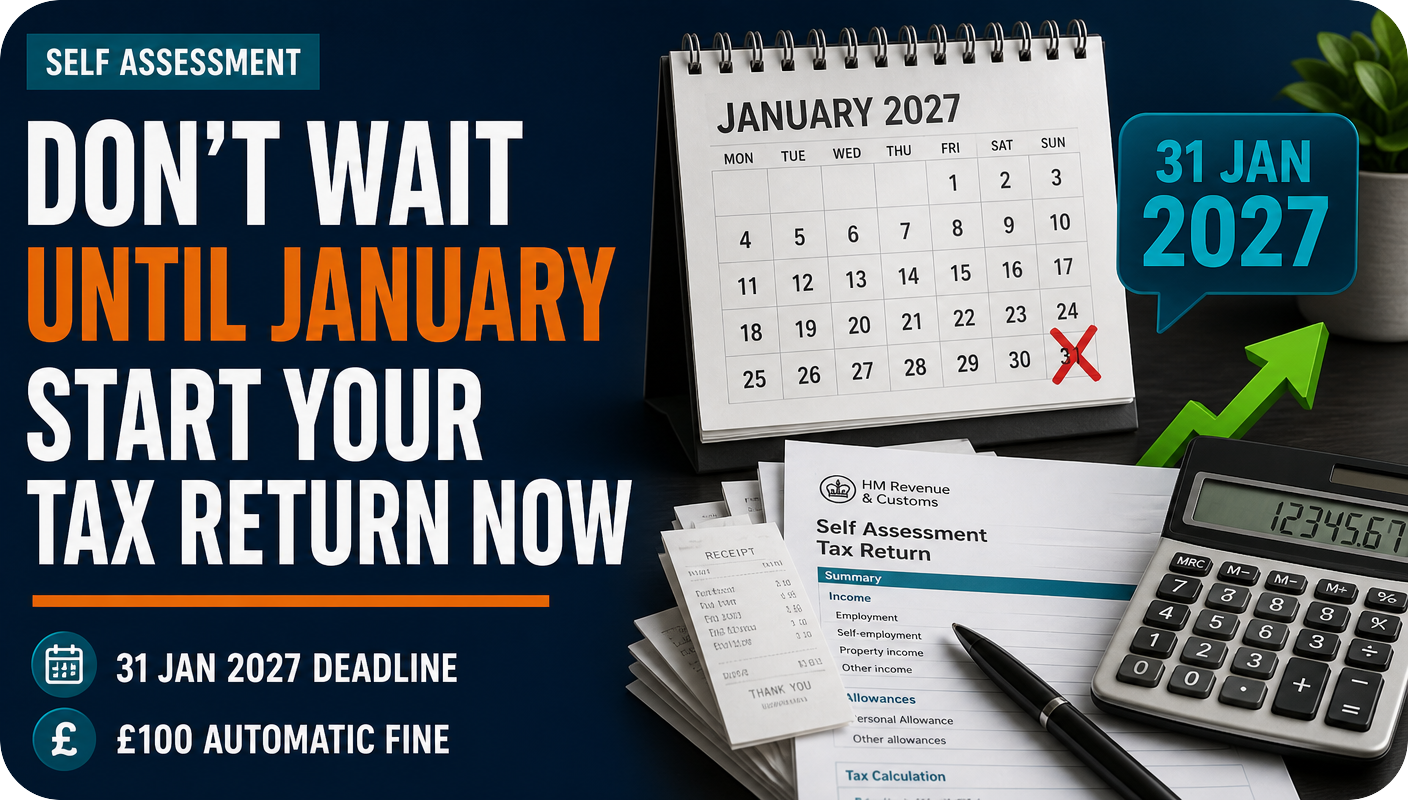
As of 14 August 2026, the 31 January 2027 Self-Assessment deadline probably feels like a lifetime away — but every year we watch the same panic set in among sole traders and self-employed clients in the first three weeks of January: missing receipts, forgotten invoices, and a mad scramble to remember what happened twelve months ago. It doesn’t have to be this way. Starting your 2025/26 tax return now, while your records are fresh and your accountant isn’t buried under a January queue, is one of the simplest ways to save money, reduce stress, and get any refund you’re owed sooner.
Key Takeaways
- The 2025/26 Self-Assessment deadline is 31 January 2027 online (31 October 2026 for paper returns).
- Missing the deadline triggers an automatic £100 fine — even if you owe no tax.
- Starting in August gives you time to gather records, claim every allowance, and avoid costly mistakes.
- Making Tax Digital for Income Tax begins in April 2026 for sole traders and landlords earning over £50,000.
- Filing early often means a faster refund and a calmer January.
What Is Self-Assessment and Who Needs to File?
Self-Assessment is HMRC’s system for collecting Income Tax from people whose income isn’t automatically taxed through PAYE. If you’re self-employed, run a small business, or have other untaxed income, you’re responsible for reporting it yourself and paying what you owe by the deadline. Many people assume Self-Assessment is only for full-time freelancers, but it catches far more people than you’d expect — including those with a side hustle, rental property, or investment income.
If you’re unsure whether you need to file, our personal tax return service can quickly confirm your obligations and take the guesswork out of the process.
You probably need to file a 2025/26 Self-Assessment if you:
- Are self-employed or a sole trader with income over £1,000
- Are a partner in a business partnership
- Earn rental income from property
- Have untaxed savings, investment, or dividend income above your allowances
- Earn over £60,000 and claim Child Benefit (High Income Child Benefit Charge)
- Are a company director without all income taxed at source
Key Figures for the 2025/26 Tax Year
Knowing where you stand against the current thresholds makes it far easier to plan ahead. Here are the figures that matter most for the 2025/26 tax year, as of 14 August 2026:
- Personal allowance: £12,570 (tax-free)
- Basic rate tax: 20% on income up to £50,270
- Higher rate tax: 40% on income between £50,271 and £125,140
- Additional rate tax: 45% on income over £125,140
- Class 4 National Insurance: 6% on profits between £12,570 and £50,270, and 2% above that
- Class 2 National Insurance: £3.45 per week if profits are above £12,570
- Trading allowance: £1,000 tax-free for small amounts of trading or casual income
- Marriage allowance: up to £1,260 transferable between spouses/civil partners
- High Income Child Benefit Charge: applies if your income is over £60,000
If you run your own business, our sole trader accounts team can help you map these figures against your actual income and expenses so there are no surprises when you file.
Action Steps — Start Gathering These Records Now
- Sales invoices and income records for the full tax year
- Business bank statements (and personal statements if you claim mixed-use expenses)
- Mileage logs for business travel
- Receipts for allowable expenses (equipment, software, subscriptions, home office costs)
- P60s and P45s if you also had employed income
- Records of pension contributions
- Gift Aid donation receipts
The Real Cost of Leaving It Until January
Beyond the stress, filing late has a real financial cost. Common mistakes we see in the January rush include missing the deadline entirely, forgetting to claim allowable expenses because receipts have been lost or forgotten, and failing to declare all sources of income — particularly side hustles, rental income, or bank interest that HMRC already has visibility of through third-party data.
Starting early also means you have time to claim everything you’re entitled to, plan for any tax bill rather than being caught out by it, and avoid the last-minute scramble to book time with an accountant when everyone else is doing the same thing.
HMRC Penalty Structure for Late Filing
- Immediately after 31 January 2027: automatic £100 fixed penalty, even if you owe no tax
- After 3 months: additional £10 per day, up to 90 days (£900)
- After 6 months: a further penalty of £300 or 5% of the tax due, whichever is higher
- After 12 months: further penalties may apply, potentially rising to 100% of the tax owed in serious cases
What About Making Tax Digital?
Making Tax Digital for Income Tax (MTD for IT) is changing how sole traders and landlords report their income to HMRC. From April 2026, anyone with qualifying income over £50,000 must keep digital records and submit quarterly updates using MTD-compatible software, rather than filing a single annual return. The threshold then drops to £30,000 from April 2027, pulling in even more sole traders and landlords.
If this applies to you, it’s worth getting set up well before your first quarterly deadline. Our guide to Making Tax Digital for the self-employed explains exactly what you need to do and when.
How 360Accounts Can Help
We help sole traders and small business owners across Surrey and beyond get their Self-Assessment sorted early, accurately, and without the stress. From gathering your records to filing directly with HMRC, our team takes care of the detail so you can focus on running your business. We also help clients get ahead of Making Tax Digital changes so there are no surprises when the new quarterly requirements kick in.
Don’t Wait Until January
Get your 2025/26 Self-Assessment sorted now — avoid penalties, claim every allowance, and take the stress out of tax season.
Book a Free CallCurious what it would cost to have us handle your return? See our pricing and get in touch if you have any questions.
Questions & Answers
Q: When exactly is the Self-Assessment deadline for the 2025/26 tax year?
A: The online filing deadline is 31 January 2027. If you file a paper return, it must be submitted earlier, by 31 October 2026. Both dates also apply to paying any tax owed for the year.
Q: What happens if I miss the 31 January 2027 deadline?
A: HMRC issues an automatic £100 penalty immediately, even if you don’t owe any tax. After three months, daily penalties of £10 apply (up to £900). After six months, a further penalty of £300 or 5% of the tax due is added, whichever is higher.
Q: Why should I start my tax return in August instead of waiting until January?
A: Starting early means your records are fresher and easier to gather, you have time to claim every allowable expense and allowance, you can plan for any tax bill in advance, and you avoid the rush that leaves many accountants fully booked in January. If you’re due a refund, filing early also gets it to you faster.
Q: What records do I need to prepare my Self-Assessment?
A: You’ll typically need sales invoices, business and personal bank statements, mileage logs, expense receipts, your P60 or P45 if you also had employed income, records of pension contributions, and any Gift Aid donation receipts.
Q: Does Making Tax Digital affect my 2025/26 Self-Assessment?
A: From April 2026, sole traders and landlords with qualifying income over £50,000 must move to Making Tax Digital for Income Tax, keeping digital records and submitting quarterly updates instead of one annual return. The threshold drops to £30,000 from April 2027, so it’s worth checking now whether you’ll be affected.
Q: What are the most common Self-Assessment mistakes?
A: The most common mistakes are missing the filing deadline, forgetting to claim allowable business expenses, and failing to declare all income — particularly side hustle earnings, rental income, and bank interest, all of which HMRC can cross-check against third-party data.