
Selling on Vinted, eBay or Etsy, Here Is When HMRC Needs to Know
Selling on Vinted, eBay or Etsy, Here Is When HMRC Needs to Know
If you sell online, HMRC probably already knows more than you think. As of 29th September 2026, platforms such as Vinted, eBay, Etsy, Amazon and Depop automatically report seller data to HMRC. The good news is that clearing out your wardrobe is not usually taxable. Running a side business is. Here is how to tell the difference.
Key Takeaways
- Platforms report you to HMRC if you make 30 or more sales, or earn over £1,735 (about €2,000) in a calendar year, as of 29th September 2026.
- Selling your own unwanted belongings is generally not taxable.
- Buying items to resell for profit is trading, and trading income over £1,000 must be declared.
- If you started trading in 2025/26, you must register for Self Assessment by 5th October 2026.
- Never ignore an HMRC “nudge letter”. Penalties can reach 30–100% of the unpaid tax.
What HMRC now sees
Since January 2024, online platforms have had to send HMRC details of their sellers under digital platform reporting rules. As of 29th September 2026, a platform must report you if you make 30 or more sales, or earn more than £1,735 (roughly €2,000) in a calendar year. HMRC matches that data against tax returns and is now sending “nudge letters” to sellers who appear not to have declared income.
Being reported is not the same as owing tax
A report simply tells HMRC you sold items. Whether you owe tax depends on what you sold and why. But if HMRC writes to you, you need a sensible answer.
Personal clear-out or trading?
Selling personal possessions you already own, such as old clothes, toys or furniture, is generally not trading income. It is not taxable unless you are doing it so regularly that it looks like a business.
If you buy items specifically to resell for profit, that is trading. Charity shop finds, car boot bargains, wholesale stock and handmade goods on Etsy all count. The profit is taxable, and you may be a sole trader without realising. Our sole trader accounts service helps you get set up properly.
Signs HMRC may see you as trading
- You buy stock to sell on
- You sell regularly and repeatedly
- You aim to make a profit
- You advertise or run a shop or brand
The £1,000 trading allowance
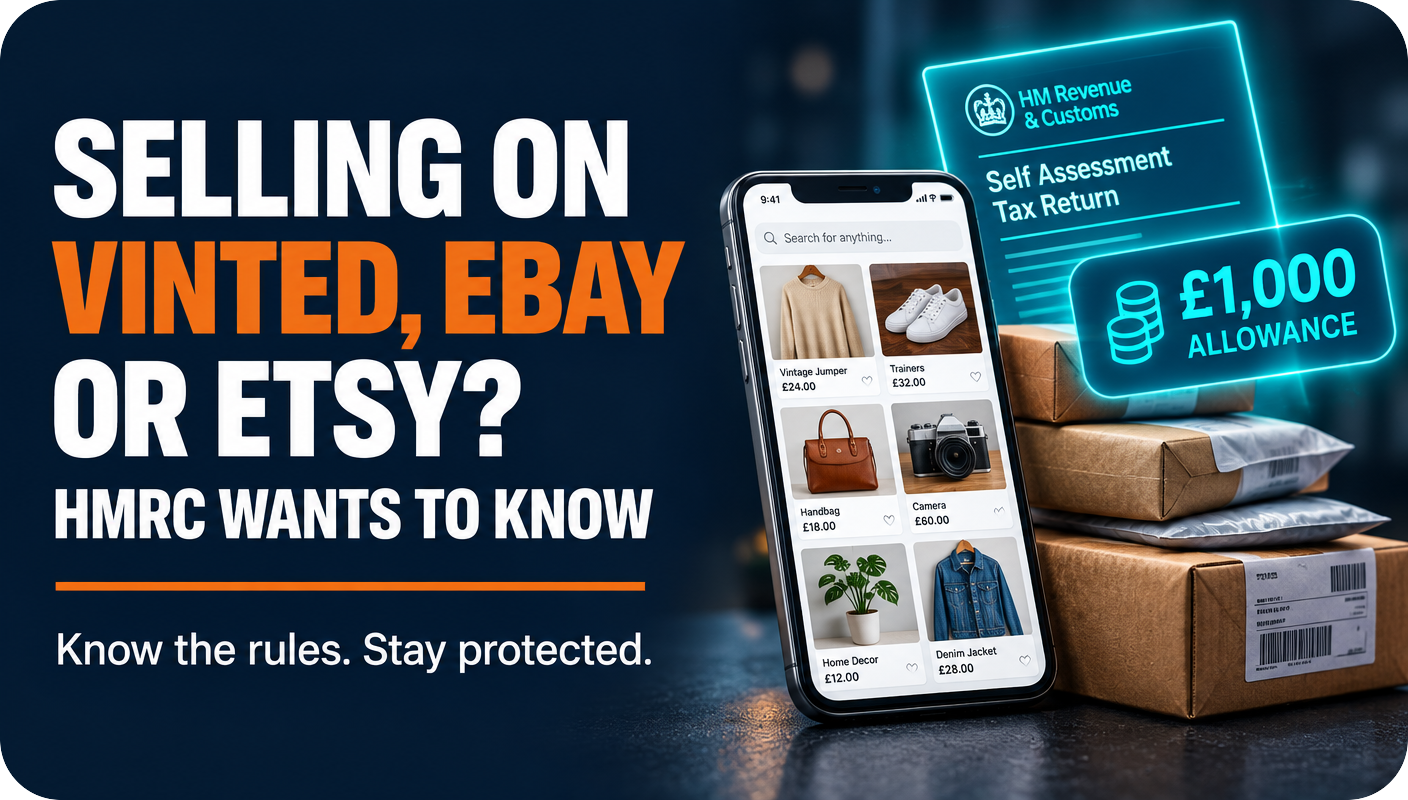
As of 29th September 2026, the trading allowance lets you receive up to £1,000 of gross trading income in a tax year without telling HMRC or paying tax. Note that it applies to income, not profit. Once your total trading income from all self-employment goes over £1,000, you must register for Self Assessment and declare it. You can then deduct either the allowance or your actual costs, whichever is better. Our personal tax returns team can file this for you.
Registration deadline
If you started trading in the 2025/26 tax year, you must register for Self Assessment by 5th October 2026. The return itself is then due by 31st January 2027. Trading income over the threshold also brings you closer to Making Tax Digital for Income Tax.
Capital Gains Tax on valuable items
Separate from trading, Capital Gains Tax can apply to a single item worth more than £6,000 (the chattel exemption) that you sell at a profit. Think jewellery, art or collectibles. Everyday second-hand goods are rarely affected.
What if HMRC gets in touch?
Do not ignore it. Deliberate under-declaring can bring penalties of 30–100% of the unpaid tax, plus interest. Replying promptly and honestly usually gives the best outcome. Consider HMRC investigation insurance for peace of mind, or contact us and we will help you respond.
Your Questions Answered
Is selling my old clothes on Vinted taxable?
Generally no. Selling your own unwanted possessions is not trading income. It becomes taxable if you buy items to resell or sell so regularly it is effectively a business.
When does online selling count as a business?
When you buy or make goods to sell at a profit, sell regularly and organise yourself like a business.
What is the £1,000 trading allowance?
As of 29th September 2026, it means up to £1,000 of trading income a tax year is tax-free and needs no declaration. It is measured on income, not profit.
What happens if HMRC contacts me?
Respond by the deadline given. If you owe tax, declaring it voluntarily reduces penalties. Get advice if unsure.
Do I need to register for Self Assessment?
Yes, if your trading income exceeds £1,000 in a tax year. For 2025/26, register by 5th October 2026.
Does the platform reporting mean I will be taxed?
No. It only gives HMRC information. Tax depends on whether your sales are trading.
Not sure where you stand?
Talk to our Guildford team. We will tell you plainly whether you need to register and help you get it right. Get in touch with 360Accounts.
WEBSITE Q&A SNIPPET — DROP INTO ANY PAGE
Does HMRC know about my Vinted or eBay sales?
Yes, if you make 30+ sales or earn over £1,735 in a calendar year, platforms report to HMRC, as of 29th September 2026.
Do I pay tax on selling my own belongings?
Generally no, unless you are buying to resell or trading regularly.
When must I register for Self Assessment?
If trading income exceeds £1,000, register by 5th October after the tax year you started. For 2025/26, that is 5th October 2026.
Can 360Accounts help me register?
Yes. Contact us and we will handle registration and your tax return.