
Small Businesses Now Account for 60% of the UK Tax Gap, What That Means for You
Small Businesses Now Account for 60% of the UK Tax Gap, What That Means for You
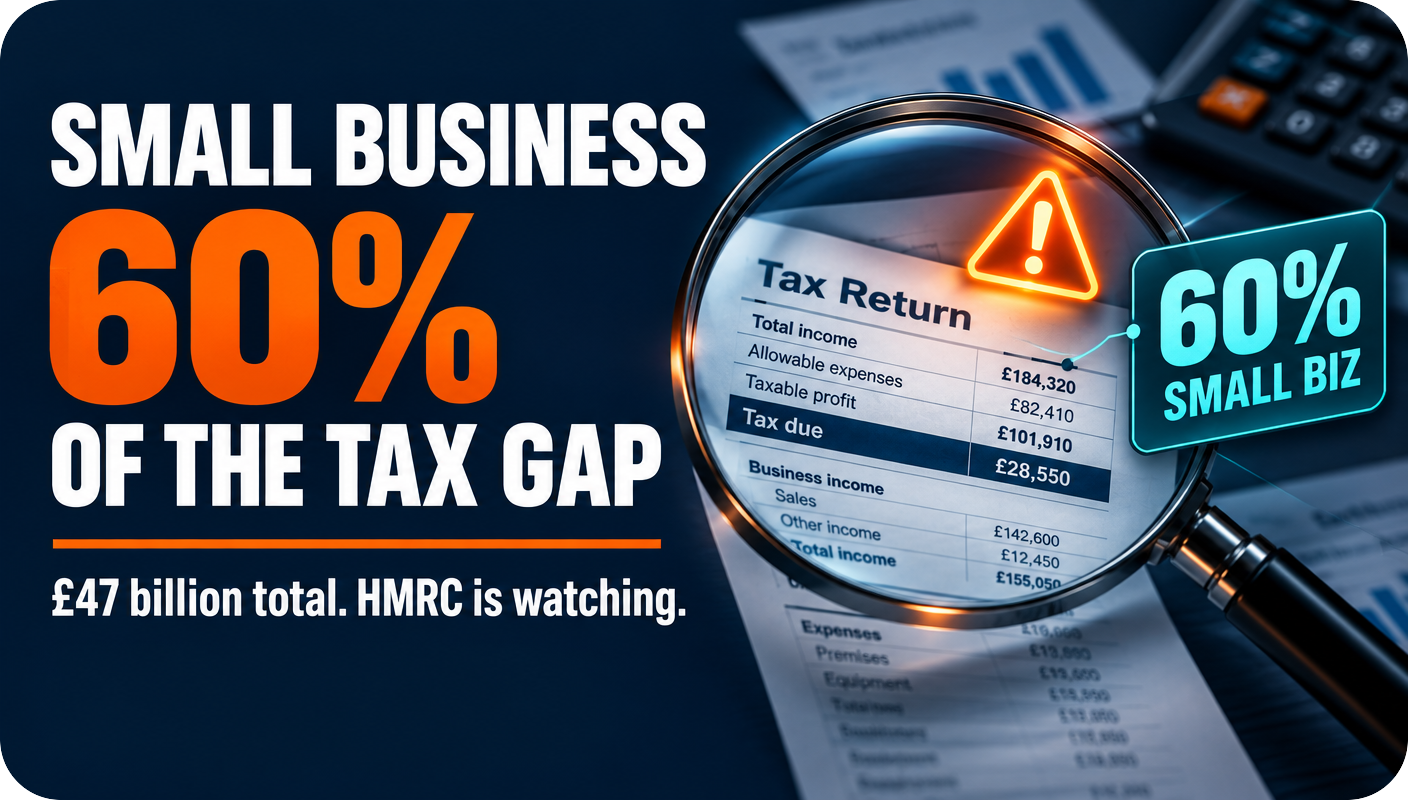
HMRC has revealed that small businesses now make up 60% of the UK tax gap, up from 44% five years ago. As of 29th September 2026, this shift is driving a sharp rise in compliance checks, “nudge letters” and investigations aimed at sole traders, Ltd companies and small business owners. Here is what it means for you and what to do about it.
Key Takeaways
- As of 29th September 2026, small businesses account for 60% of the UK tax gap, up from 44% five years ago.
- The total tax gap is around £47 billion, with small businesses responsible for roughly £28 billion.
- HMRC is using AI and data-matching to spot discrepancies in returns.
- Penalties can reach 100% of the unpaid tax for deliberate errors, and 15–30% for careless ones.
- Accurate records kept throughout the year are your best defence.
(as of 29th September 2026)
(as of 29th September 2026)
What the Figures Actually Say
The tax gap is the difference between the tax HMRC expects to collect and the tax actually paid. As of 29th September 2026, it is estimated at around £47 billion, and approximately £28 billion of that comes from small businesses. Five years ago, small businesses accounted for 44% of the gap. The rise to 60% has made them HMRC’s clearest priority.
This does not mean most small businesses are doing anything wrong. Most are honest, but many are busy, and mistakes happen when records are patchy. HMRC is now looking harder at exactly those gaps.
What this means in practice
Expect more contact from HMRC. That includes nudge letters suggesting you review a return, formal compliance checks and, in more serious cases, full investigations. Sole traders and Ltd companies are both in scope.
How HMRC Is Finding Discrepancies
As of 29th September 2026, HMRC is using AI and data-matching tools to compare what you report against bank data, card payment records, online marketplace data, VAT returns and payroll submissions. Inconsistencies are flagged automatically, often before any human reviews your file.
Areas of common focus
- Unreported cash income — takings that do not match lifestyle, deposits or card data.
- Overclaimed expenses — private costs treated as business costs.
- Missing VAT registrations — turnover above the threshold without registering.
- Payroll and PAYE errors — incorrect deductions, late filings or misclassified workers.
Why records matter more than ever
If HMRC’s data disagrees with yours, your records are what settle the question. Our bookkeeping services keep your figures accurate and up to date all year, and our sole trader accounts service ensures your return reflects them.
What to Do If You Receive a Letter
Do not ignore it, and do not rush a reply. Respond promptly, within the deadline stated, and take professional advice before you send anything. A carefully prepared, accurate response can often resolve a check quickly. Our team provides HMRC investigations and compliance support to handle correspondence on your behalf.
Many clients also choose HMRC investigation insurance, which covers professional fees if HMRC opens an enquiry, so the cost of defending yourself does not fall on the business.
Penalties: What Is at Stake
As of 29th September 2026, penalties for deliberate errors can be up to 100% of the unpaid tax. Careless errors typically attract penalties of 15–30%. Interest is charged on top. Correcting mistakes voluntarily, before HMRC finds them, usually reduces the penalty significantly.
A practical step: check that your Self Assessment records are complete well ahead of the 31st January 2027 online filing deadline.
Frequently Asked Questions
What is the tax gap?
It is the difference between the tax HMRC should receive and what it actually collects. As of 29th September 2026, it is estimated at around £47 billion.
Why are small businesses now under more scrutiny?
Because they now make up 60% of the gap, up from 44% five years ago, roughly £28 billion in total.
What triggers an HMRC compliance check?
Data mismatches, unusual expense claims, late or missing filings, unregistered VAT and payroll inconsistencies are common triggers. Some checks are also random.
How do I protect myself?
Keep accurate records all year, reconcile your accounts regularly, register for VAT on time and get professional support.
What are the penalties for errors?
Up to 100% of the unpaid tax for deliberate errors and 15–30% for careless ones, plus interest.
What should I do if I receive a letter from HMRC?
Respond promptly and seek professional advice before replying.
Worried about an HMRC check?
Speak to our Guildford team today. We help sole traders and Ltd companies across Surrey keep their records right and respond with confidence.
WEBSITE Q&A SNIPPET — DROP INTO ANY PAGE
Are small businesses really 60% of the tax gap?
Yes. As of 29th September 2026, HMRC figures show 60%, up from 44% five years ago.
What should I do if HMRC sends me a nudge letter?
Respond promptly, review your records and speak to an accountant before replying.
What penalties could I face?
Up to 100% of unpaid tax for deliberate errors and 15–30% for careless ones.
Can 360Accounts help with an HMRC check?
Yes. We offer compliance support and investigation insurance.