Trading allowance set to triple to £3,000 from April 2027: what sole traders need to know
 Written by Gary Winterborne - AATQB, AATQB · Partner
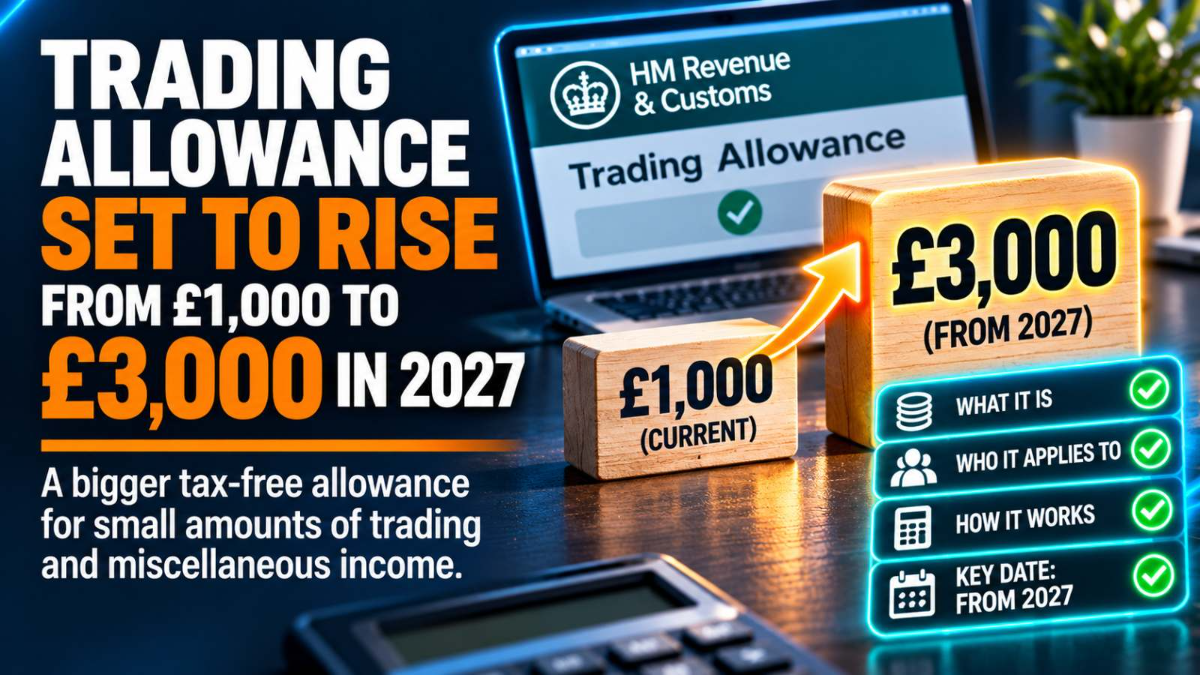
Trading allowance set to triple to £3,000 from April 2027: what sole traders need to know
Sell crafts online, do odd jobs at the weekend or take on the occasional freelance project? Then you've probably wondered whether you need to tell HMRC. The good news is that the tax-free trading allowance is set to triple. In this guide, we explain what's changing, what isn't changing yet, and the one mistake we see time and again.
Key Takeaways
- As of 3rd November 2026, the trading allowance is £1,000 per tax year.
- The government has announced it will rise to £3,000 from 6 April 2027, the start of the 2027-28 tax year.
- Until then, the £1,000 limit still applies, so don't jump the gun.
- The allowance is based on your income (takings before expenses), not your profit.
- Go over the limit and you'll generally need to register for Self Assessment and file a tax return.
What is the trading allowance?
The trading allowance is a tax-free amount for small bits of self-employed or casual income. It's designed for people who earn a little on the side, rather than those running a full-time business.
Think of things like selling items you make, doing odd jobs for neighbours, or picking up occasional freelance work alongside your day job.
As of 3rd November 2026, the allowance is £1,000 per tax year. It has stayed at that level since it was introduced in the 2017-18 tax year.
If your trading income for the year is £1,000 or less, you generally don't need to tell HMRC about it or complete a Self Assessment return for that income.
What's changing in April 2027?
The government has announced that the trading allowance will rise from £1,000 to £3,000 from 6 April 2027. That's the first day of the 2027-28 tax year.
For many people with a small side hustle, that's a meaningful change. Someone earning a couple of thousand pounds a year from a hobby business may no longer need to register with HMRC for that income once the higher limit kicks in.
Important: it isn't £3,000 yet
As of 3rd November 2026, the allowance is still £1,000. The £3,000 figure is an announced future change for the 2027-28 tax year, not the rule for this year. Announced changes can be adjusted before they take effect, so it's worth checking GOV.UK or speaking to an adviser before you rely on it.
In other words, the income you earn between now and 5 April 2027 is still measured against the £1,000 limit.
The common mistake: income, not profit
Here's the mistake we see all the time. People assume the allowance applies to their profit. It doesn't. It's based on your gross trading income, meaning your takings before any expenses.
Here's a simple example. Say you sell handmade candles. Over the tax year, customers pay you £1,400. Your wax, jars and postage cost £600, so your profit is £800.
It's tempting to think you're under the £1,000 limit. But your takings were £1,400, so you're over it. That means you'd generally need to register for Self Assessment and file a tax return.
Once the £3,000 allowance arrives, the same principle will apply. It will still be about what comes in, not what's left over.
Allowance or expenses: you usually pick one
If your income is over the allowance, you'll normally have a choice to make on your tax return. You can generally either deduct the allowance from your income, or deduct your actual business expenses, but not both.
If your expenses are low, using the allowance can be simpler. If your costs are high, claiming your real expenses may work out better. It's a sum worth doing properly, and our personal tax returns service can help you choose the right option.
There are also some situations where the allowance can't be used, for example certain income from your employer or from a partnership you're part of. If you're unsure, it's worth checking before you file.
What to do now
Whether the change affects you or not, the best habit you can build is simple: keep a record of every pound coming in. Online selling platforms now share information about sellers with HMRC, so it pays to know your own numbers.
Your side hustle checklist
- Note every payment you receive, with the date and what it was for.
- Add up your total takings for the tax year, before expenses.
- Keep receipts for costs, in case claiming expenses works out better.
- Remember that the allowance covers all your trading income combined, not each activity separately.
- Check your total against £1,000 for 2026-27, and the announced £3,000 from 2027-28.
A simple spreadsheet or notes app is often enough when you're starting out.
What if you're already over the limit?
If your takings are already above £1,000 this tax year, you'll generally need to register for Self Assessment and file a tax return. Don't wait for the higher allowance to arrive, as it won't apply to this year's income.
If your side hustle is growing into something bigger, it may be time for proper books. Our sole trader accounts service keeps things tidy, and we can also explain how Making Tax Digital for Income Tax may affect you as your income grows.
Your Questions Answered
How much is the trading allowance right now?
As of 3rd November 2026, it's £1,000 per tax year, and that applies for the whole of 2026-27.
When does the £3,000 trading allowance start?
The government has announced it will apply from 6 April 2027, the start of the 2027-28 tax year. It's worth confirming on GOV.UK closer to the time.
Is the trading allowance based on profit or income?
Income. It's measured on your takings before expenses, not on what you have left after costs.
Do I need to tell HMRC if I earn under the allowance?
Generally, no. If your gross trading income is within the allowance, you usually don't need to register or file a return for that income.
Can I claim the allowance and my expenses?
Usually not. If you're over the limit, you normally choose either the allowance or your actual expenses, whichever suits you better.
Does the allowance apply to each side hustle separately?
No. It covers your total trading income across all your activities combined.
Not sure where you stand?
Our friendly Guildford team can look at your side income and tell you, in plain English, whether you need to register and what's best for you. Get in touch with 360Accounts.
WEBSITE Q&A SNIPPET — DROP INTO ANY PAGE
What is the trading allowance?
It's a tax-free amount for small self-employed or casual income, which as of 3rd November 2026 is £1,000 per tax year.
Is the trading allowance going up?
The government has announced it will rise to £3,000 from 6 April 2027, but £1,000 still applies until then.
What happens if I earn over the trading allowance?
You'll generally need to register for Self Assessment with HMRC and file a tax return.
About the author
Gary Winterborne - AATQB, AATQB · Partner
Meet Gary! From professional cricketer to business owner, Gary has enjoyed a varied career, running businesses across industries including construction and retail. His hands-on experience means he understands the challenges business owners face. Friendly, approachable and passionate about helping others succeed, Gary brings real-world business knowledge to 360 Accounts & Bookkeeping. He believes accounting should be straightforward, stress-free and focused on helping your business grow.