
Employer NIC Rise and Employment Allowance, What Small Business Owners Must Know for 2026/27
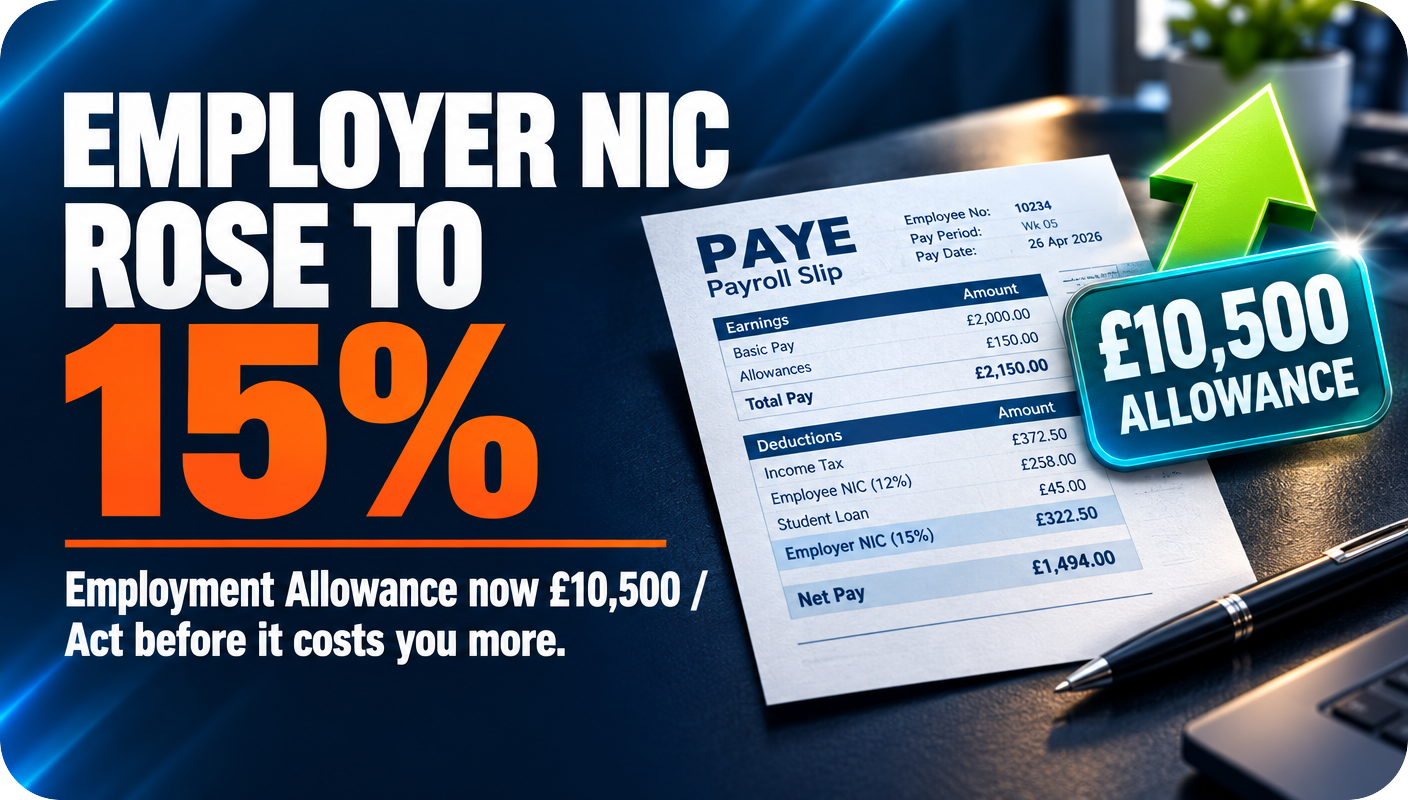
As of 28 September 2026, employers face higher National Insurance costs following April's changes. Employer NIC is 15%, up from 13.8%, and starts at a lower threshold. The Employment Allowance is now £10,500, but some eligible businesses have yet to claim.
What changed in April 2026?
Employers now pay NIC at 15% on employee earnings above the secondary threshold. That threshold has dropped from £9,100 to £5,000 a year, so NIC starts on a larger part of each employee's pay. The change can increase payroll costs even where wages have not changed.
A business with three employees on £25,000 each will pay roughly £1,500 more in NIC than in 2025/26. For an eligible employer, the £5,500 increase in Employment Allowance more than covers that example. Actual costs vary with payroll and circumstances.
Who can claim the Employment Allowance?
Eligible employers can reduce their Class 1 NIC bill by up to £10,500 per tax year. Most employers with a Class 1 NIC liability can claim. The previous £100,000 NIC bill cap has been removed, extending access to more businesses.
How to claim and what to check
Claim through your payroll software when submitting an Employer Payment Summary (EPS) to HMRC. You may claim at the start of the tax year or later; the allowance then reduces your employer NIC in real time. If eligible but not claiming, ask your payroll provider or accountant how to put it right.
Check that payroll records use the correct 2026/27 rate and threshold, and confirm your Employment Allowance claim has been accepted. Consider whether your salary structure remains appropriate, but check tax, pension and employment implications before changing pay.
Questions employers often ask
What is the new employer NIC rate from April 2026?
It is 15%, up from 13.8%. The secondary threshold, when employer NIC starts, also dropped from £9,100 to £5,000 a year, so employers pay NIC on employee earnings sooner.
What is the Employment Allowance and who can claim it?
It lets eligible employers reduce their Class 1 NIC bill by up to £10,500 per tax year. Most employers with a Class 1 NIC liability can claim. A sole director with no other employees on the payroll cannot.
How do I claim the Employment Allowance?
Claim through your payroll software when submitting your Employer Payment Summary (EPS) to HMRC. You can claim at the start of the tax year or at any point during it. The allowance is applied against your NIC liability in real time.
Can the Employment Allowance offset the NIC rise?
For many businesses, yes. The allowance rose by £5,500, from £5,000 to £10,500, which for eligible employers more than covers the additional NIC cost from the rate and threshold changes. Your result depends on your payroll and eligibility.
Does the £100,000 income cap still apply?
No. From April 2026, the previous rule excluding employers with an employer NIC bill over £100,000 was removed. More businesses can now claim, provided they meet the other eligibility conditions.
What should I check right now?
Confirm your payroll software is claiming the Employment Allowance if you are eligible. Review your secondary threshold settings and check that your NIC calculations are correct for 2026/27. Speak to your accountant if you are unsure.
Explore our payroll services, limited company accounts and bookkeeping services. We support employers across Guildford, Surrey and beyond.
Want confidence in your payroll?
We can review your payroll and Employment Allowance claim, and explain the 2026/27 changes.
Contact our teamView our pricing