
Payroll & PAYE for Small Businesses: What Changed in April 2026
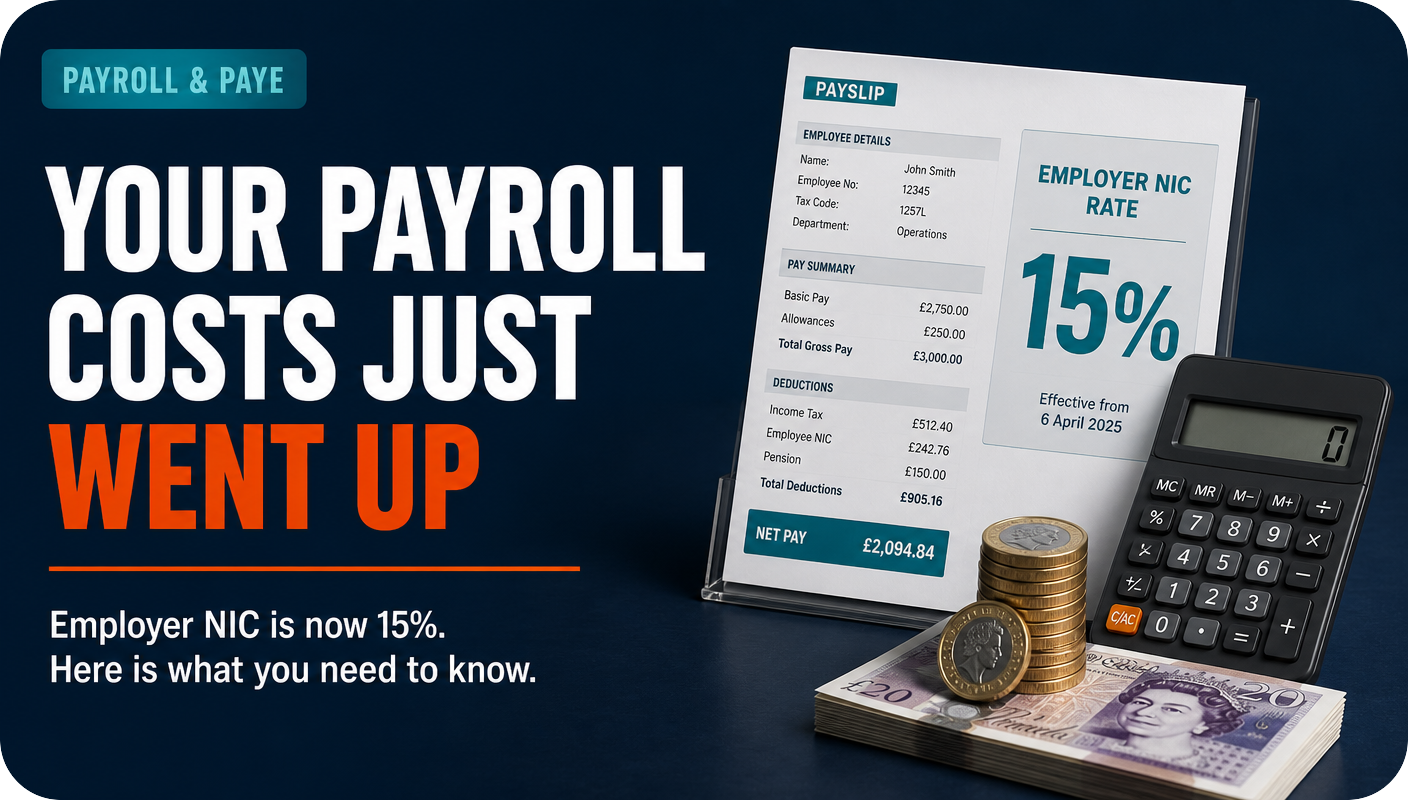
Payroll & PAYE for Small Businesses: What Changed in April 2026
If you run payroll for a limited company or a small business, you’ve probably already noticed your wage bill looks different this year. From 6 April 2026, employer National Insurance rose from 13.8% to 15%, the secondary threshold at which you start paying it fell from £9,100 to £5,000 a year, and the National Living Wage climbed to £12.21 an hour for workers aged 21 and over. All figures and rates in this guide are correct as of 6 August 2026. This shake-up matters most to Ltd companies with employees and small businesses running their own payroll — if that’s you, here’s exactly what changed and what to do about it.
- Employer NIC increased from 13.8% to 15% from 6 April 2026, as of 6 August 2026.
- The secondary threshold dropped sharply from £9,100 to £5,000 per year (£417 per month), meaning NIC now applies much earlier in an employee’s pay.
- The Employment Allowance more than doubled to £10,500, helping offset the extra cost for qualifying businesses.
- National Living Wage rose to £12.21 per hour for those aged 21+.
- RTI filing rules and late-penalty regimes remain strict — an FPS is still due on or before every payday.
What Actually Changed in April 2026
The Spring changes to payroll costs came from three separate but related reforms that all landed on the same date, compounding the impact on small employers.
- Employer NIC rate: up from 13.8% to 15% on earnings above the secondary threshold.
- Secondary threshold: down from £9,100 to £5,000 per year (£417 per month) — the point at which employer NIC starts being charged on each employee.
- Employment Allowance: up from £5,000 to £10,500 per year, available to eligible employers to offset their employer NIC bill.
On top of these payroll-specific changes, the National Living Wage rose to £12.21 per hour for employees aged 21 and over from April 2026, pushing up gross pay bills before NIC is even calculated. For help getting your numbers right, our payroll services take care of the whole calculation and filing process for you.
The Real Cost: What This Means for Your Pay Bill
Let’s look at a worked example: a small business with 3 employees, each earning £30,000 a year.
Under the old rules (2025/26): Employer NIC was charged at 13.8% on earnings above £9,100. That’s £20,900 of NICable pay per employee (£30,000 − £9,100), giving employer NIC of roughly £2,884 per employee, or £8,652 across all three.
Under the new rules (2026/27, as of 6 August 2026): Employer NIC is now charged at 15% on earnings above £5,000. That’s £25,000 of NICable pay per employee (£30,000 − £5,000), giving employer NIC of £3,750 per employee, or £11,250 across all three — an increase of £2,598 a year before any Employment Allowance is applied.
If you’re unsure how these numbers land for your own business, our limited company accounts team can run the figures against your actual payroll data.
Employment Allowance: Are You Claiming It?
- Who qualifies: Most employers with employer NIC liability under £100,000 in the previous tax year, as long as you're not a single-director company with no other employees.
- How to claim: Switch on the Employment Allowance flag in your payroll software (or ask your bookkeeper to do it) and it will be applied automatically against your employer NIC each pay run.
- The limit: For 2026/27 the Employment Allowance is £10,500 — more than double last year’s £5,000, and enough to wipe out the extra NIC cost for many very small employers.
Not claiming it is one of the most common payroll mistakes we see. If you’re not sure whether it’s switched on for your business, get in touch and we’ll check for you — see our pricing page for how payroll support fits into your package.
RTI, Auto-Enrolment & Staying Compliant
Alongside RTI, don’t forget your auto-enrolment pension duties:
- Minimum employer contribution: 3% of qualifying earnings.
- Minimum employee contribution: 5% of qualifying earnings.
- Combined minimum total contribution: 8% of qualifying earnings.
- Re-enrolment and assessment duties continue every pay period as staff circumstances change.
Good bookkeeping services alongside your payroll make it far easier to stay on top of RTI deadlines and pension contributions without last-minute scrambles.
How 360Accounts Can Help
Payroll got more complicated (and more expensive) this year. We run payroll for small businesses across Surrey — RTI filing, Employment Allowance claims, auto-enrolment, and payslips, all handled for you.
Explore Our Payroll ServicesFrequently Asked Questions
Why has my payroll cost gone up so much this year?
Two changes landed together in April 2026: employer NIC rose from 13.8% to 15%, and the secondary threshold fell from £9,100 to £5,000. Together they mean you pay a higher rate on a much bigger slice of every employee’s salary, as of 6 August 2026.
Do I automatically get the Employment Allowance?
No — it has to be claimed through your payroll software each tax year. For 2026/27 it’s worth up to £10,500 against your employer NIC bill, so it’s well worth checking it’s switched on.
What is RTI and when do I need to file it?
Real Time Information (RTI) is HMRC’s system for reporting pay and deductions. You must submit a Full Payment Submission (FPS) on or before each payday — filing it late can trigger penalties of £100 per month for businesses with 1–9 employees.
What are the minimum auto-enrolment pension contributions?
The statutory minimums remain employer 3% and employee 5% of qualifying earnings, for a combined 8% total, as of 6 August 2026.
Has the minimum wage changed too?
Yes — the National Living Wage rose to £12.21 per hour for workers aged 21 and over from April 2026, adding further pressure to small business pay bills alongside the NIC changes.
Can an accountant take payroll off my hands entirely?
Yes. Our payroll services cover calculations, RTI filing, payslips, Employment Allowance claims, and auto-enrolment, so you don’t have to keep track of every rule change yourself.